
Reviewed · HISTORICAL TOURS
Oscar History and Film Set Studio Tour at the Biltmore Hotel
Los Angeles has a funny way of hiding its movie magic in plain buildings. This one-hour Oscar history and film set walk inside the Millennium Biltmore turns the hotel into a time machine, using smart glasses to layer past scenes onto real rooms.
I like two things a lot. First, you get a tight route through the hotel’s most famous spaces, from the Music Room to the Historic Corridor where early Academy Awards took place. Second, the smart glasses approach makes the movie and awards stories feel immediate, not like a slideshow.
One thing to consider: it is a short, group-paced walk. If you want free roaming or extra time sitting with details, you may feel slightly rushed in just 60 minutes.
Key things I’d mark on your map before you go
- Smart glasses AR overlays that show footage and scenes right where they happened
- Academy Awards origin story inside the spaces tied to early ceremonies
- Room-by-room architecture stops including the Music Room and Moorish-inspired Rendezvous Court
- Downtown LA film connections beyond the hotel, framed through what was shot there
- Small group size with a maximum of 10 travelers for smoother pacing
- One-hour format that is easy to stack into a busy LA day
Why the Millennium Biltmore still feels like Hollywood, not a museum
The Millennium Biltmore Historic Hotel is one of those Los Angeles landmarks where the building itself does the storytelling. You are not just looking at décor. You are walking through spaces that have been tied to awards nights, gala culture, and film work for decades.
What I like about this tour is that it stays practical. You get a route you can actually follow in one hour, and each stop connects architecture to film history. That matters in DTLA, where you can easily burn time hopping between attractions that feel unrelated.
And because it uses smart glasses, you also get a clearer sense of how the rooms looked during different eras. That is the whole point. The Biltmore becomes both a landmark and a stage.
You can also read our reviews of more historical tours in Los Angeles



Getting there on Olive Street, and what 1 hour really means
You start at the Millennium Biltmore Historic Hotel, 507 S Olive St, Los Angeles, CA 90013. The tour ends back at the same meeting point, which is helpful when you are planning the rest of your day in Downtown LA.
The tour is about one hour. That time limit is not a flaw, it is a design choice. It keeps the walk focused on the hotel’s big cinematic and awards-linked spaces, so you leave with a mental map instead of a blur of rooms.
The group is capped at 10 travelers. For a hotel walk, that is a sweet spot. It usually means you get more attention as the guide points things out, and the smart glasses moments can flow without constant crowding.
If you like structure, this works. If you want to linger, you might wish for longer. The tour is short on purpose, and the goal is to get you through the story beats fast.
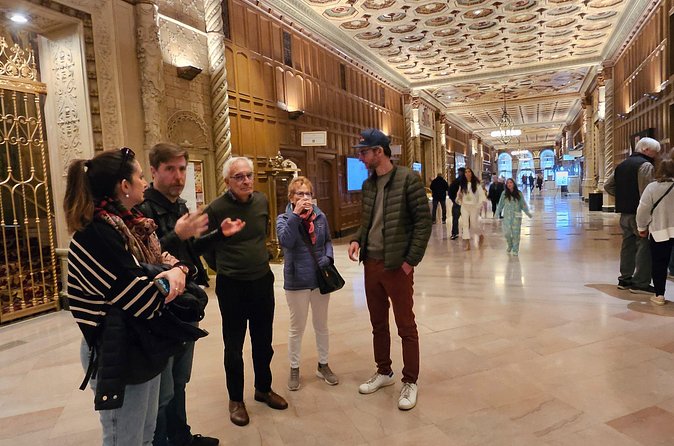
Music Room and Galleria: where the hotel starts talking in details
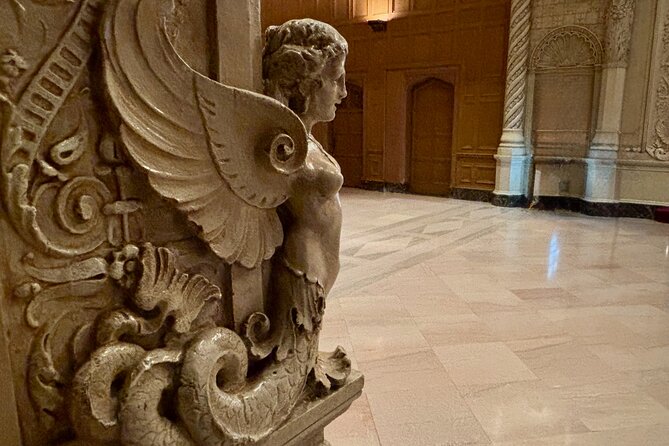
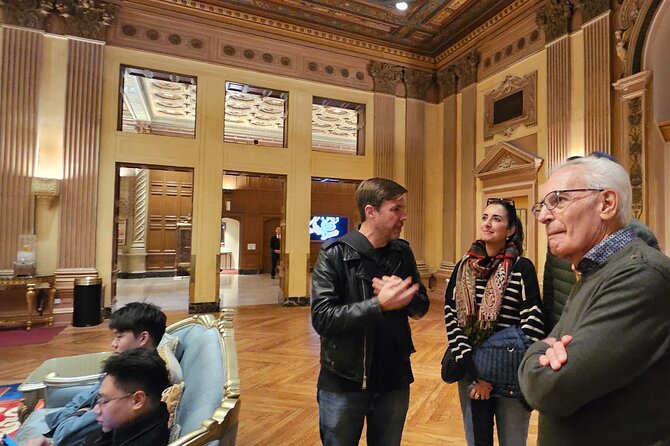
The tour begins with the kind of room that makes you look up even if you are trying not to. In the Music Room, you get the story behind its cherub-filled ceiling, and the Italian Renaissance influence that shaped how the space was designed. This is the kind of stop where the guide’s descriptions help you notice the difference between surface beauty and intentional symbolism.
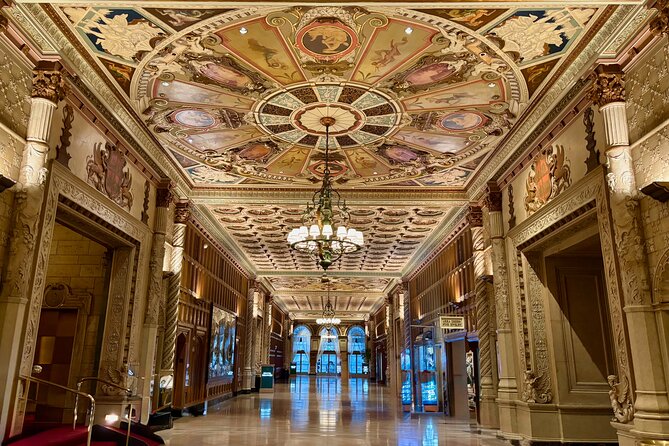
Then you move into the Galleria, the ornate corridor space where the artwork and mood shift from intimate to ceremonial. The tour highlights that the corridor is painted by Giovanni Smeraldi, which gives you a concrete name to attach to what you are seeing.
Practical tip: as you move through the Galleria, slow down when the guide pauses. This is where people often keep walking and miss small visual cues, like ceilings and wall treatments, that set the stage for the AR overlays later.
The value here is that you are not only hearing movie stories. You are learning how the hotel’s style supported the kind of events Hollywood loved to film and photograph.
The Historic Corridor and the Oscar origin thread
This is the part of the tour that connects the word Oscar to the building, not just to Hollywood mythology.
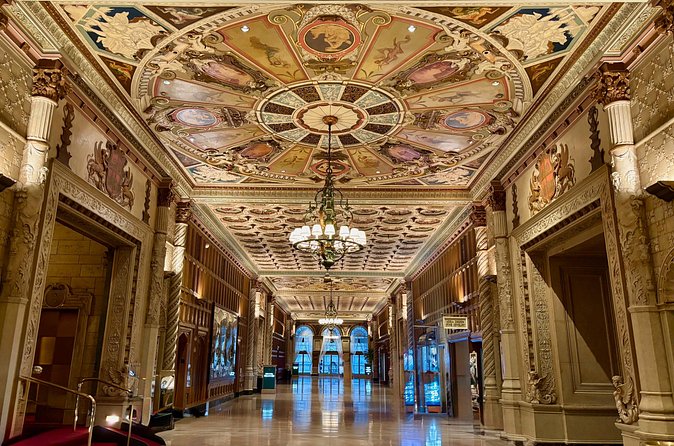
In the Historic Corridor, the tour focuses on the fact that the first Academy Awards were held there. That one detail changes how you experience the hallway. You are no longer looking at pretty architecture. You are standing in a space tied to the start of a cultural tradition.
What I like about this approach is that it gives the awards story a physical anchor. A lot of Oscar history stays abstract. Here, it is pointed and placed inside a real building with visual context.
If you are an awards-season person, this stop lands. If you are more of a film watcher than an awards watcher, it still works because it ties directly to why hotels like the Biltmore mattered for press, glamour, and staging.
Olive Street Entrance and the Crystal Ballroom, from street-level to gala-lights
Next you visit the VIP Olive Street Entrance, a feature that the tour notes was seen in Chinatown. Even if you have never visited this hotel before, that reference gives you a quick way to connect it to the Los Angeles you already know from movies.
Then comes the Crystal Ballroom, described as a hub for Hollywood galas. This is where the tour leans into the hotel’s role as a social stage. It is easy to imagine the event energy, even before you factor in filmed scenes.
One review specifically called out the feeling of standing in a major room and watching historic footage play while staying in the space. That is the key benefit of the smart glasses format here. You get the sense of time layered onto the same floor plan.
If ballrooms and gala settings are your thing, this stop is often a highlight.




The Gold Room: Prohibition-era secrets under the surface
The tour also includes the Gold Room, with a note about its Prohibition-era speakeasy past. That is a strong theme shift, from Oscars and galas to the kind of underground Hollywood love stories and power plays that fit the era.
This is the stop where the AR component can be especially satisfying, because the contrast between the hotel’s current look and its older atmosphere is part of the fun. You get the feeling of stepping between eras without leaving the room.
I also appreciate that the tour does not treat the Gold Room as a vague spooky story. It frames it as a specific historical concept, a speakeasy during Prohibition, and places that idea inside an identifiable location in the building.
The Rendezvous Court finale: Moorish-inspired drama for a last hit
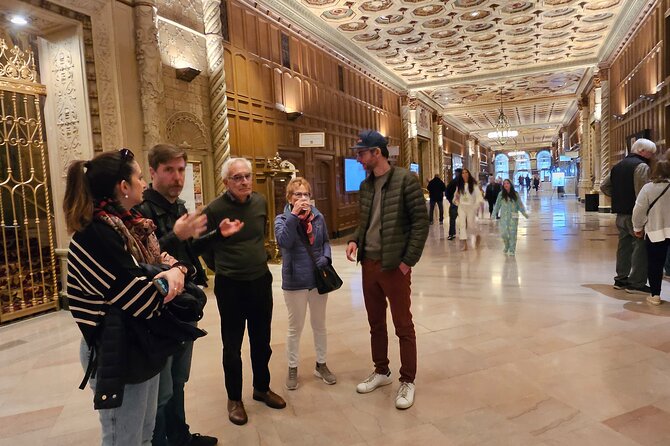
The tour ends at the Rendezvous Court, described as a Moorish-inspired masterpiece. This finale matters because it pulls your attention back to the hotel’s design language.
After you’ve taken in awards context, film references, and Prohibition vibes, the Rendezvous Court gives you a visual grand finish. You are walking out with the feeling that the building was built to host important moments, not just to be photographed.
It is a good closing note for a one-hour tour, because it wraps up the story with architecture you can still picture later.
Smart glasses and AR: how to get the most from the tech
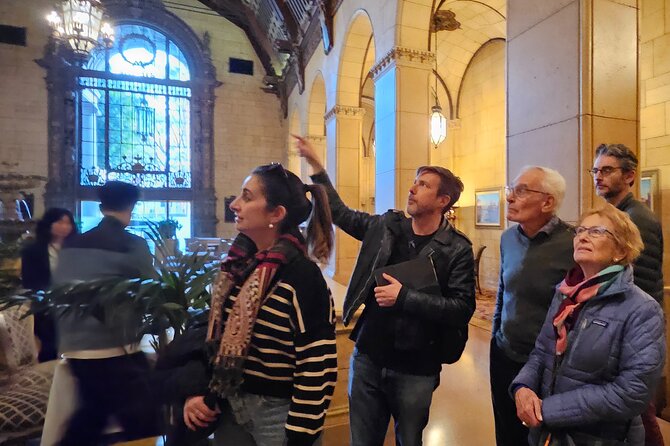
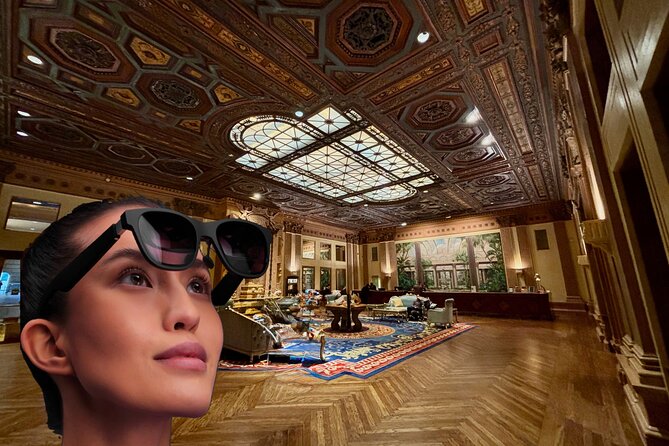
The tour experience uses smart glasses to overlay historical events, scenes, and movie clips directly into the rooms you are standing in. You will likely also use a phone as part of the experience, since one review mentioned glasses paired with your phone.
How to make it work for you:
- Pay attention when the guide tells you exactly where to look, because the overlays are tied to the spot you are standing.
- If you are someone who walks forward automatically, practice a quick pause. The AR moments land best when you stop at the intended viewing point.
- Keep your expectations simple: you are not watching full movies. You are getting short, targeted moments that match each room’s story.
From the tour description and reviews, the overlays can include Oscars ceremony scenes and Prohibition-era secrets, plus movie and pop culture connections that match the rooms. That is why this format feels different from a standard interior tour. It turns architecture into a stage set with a readable timeline.
If you have never tried AR before, you may think it sounds gimmicky. In practice, it works best as a storytelling tool, not as a tech demo. The best part is how quickly you understand what you are looking at.
Film-set connections: why this tour works for both movie fans and design fans
A common problem with film tours is that they focus on plot trivia. This one uses film to explain place, which is more useful.
You get examples of well-known productions linked to the Biltmore, including:
- Fight Club
- Chinatown
- Oppenheimer
- Ghostbusters
- Beverly Hills Cop
- Music video references tied to Taylor Swift and Jisoo
One review also highlighted a memorable moment: standing in the ballroom area and watching footage connected to the 1960 DNC nominating JFK. Even if you are not a politics-history person, that is a powerful example of how the hotel functions as a filming and event location across time.
Why this matters for your day: it helps you stop thinking of Los Angeles as scattered locations. It becomes one connected set of spaces with long film memory.
Price and value: is $25 worth it in DTLA?
At $25 per person for about one hour, this tour is priced like a focused add-on. For a Downtown LA activity, that is not a small number, but it also is not a big-ticket production.
Here is the value logic:
- You get admission ticket included, which matters because some hotel-based experiences charge separately for access.
- The AR smart glasses add real value because you are getting more than a guided walk. You are getting room-placed footage and visuals.
- The maximum group size of 10 helps keep it from feeling like a rush-through.
If you have limited time in LA, this can be a smart way to get Hollywood-meets-architecture knowledge without spending half a day traveling between spots. If you prefer long, unstructured wandering, you might want a different kind of Biltmore visit. But for people who like stories tied to specific rooms, the price feels fair.
Who should book the Oscar history and film-set walk
This is a great fit if you:
- Love film settings and want to see where famous scenes connect to real rooms
- Like awards-season culture, especially if you care about the Academy Awards origin angle
- Enjoy architecture and want a guided way to notice details like ceiling work and corridors
- Are curious about AR, but you want it used for storytelling, not for gadget play
It may be less ideal if you:
- Want a lot of free time to take photos without being guided
- Dislike wearing smart glasses for a full portion of your experience
- Need a very long tour format, since this is designed for one-hour pacing
Also, the tour is in English, and it is described as suitable for most travelers. If you are traveling with teens or adults who enjoy movies, it tends to land well.
Should you book this tour or skip it?
Book it if you want a compact way to connect Oscar origins, Prohibition-era vibes, and major film-set locations inside one landmark hotel. The smart glasses are the differentiator, and the room-by-room flow keeps you from feeling lost.
Skip it if you are looking for a slow, gallery-style interior visit. This is a guided story experience, and the timing is tight on purpose.
If you are doing a DTLA day and you want one activity that feels different from a typical sightseeing stop, this is a strong choice.
FAQ
How long is the Oscar history and film set tour at the Biltmore?
The tour lasts about 1 hour.
Where does the tour start and where does it end?
The meeting point is the Millennium Biltmore Historic Hotel, 507 S Olive St, Los Angeles, CA 90013. The activity ends back at the meeting point.
What is the price?
The price is $25.00 per person.
Is admission included?
Yes, admission ticket is included.
What language is the tour offered in?
The tour is offered in English.
How big is the group?
The tour has a maximum of 10 travelers.
Do I need to bring a ticket?
You’ll have a mobile ticket.
How far in advance is it usually booked?
On average, it is booked about 25 days in advance.
Is there free cancellation?
Yes. You can cancel for a full refund if you cancel up to 24 hours in advance.
Where is the hotel located in relation to transit?
The meeting point is near public transportation.
More Historical Tours in Los Angeles
More Tours in Los Angeles

More Tour Reviews in Los Angeles
Not for you? Here's more nearby things to do in Los Angeles we have reviewed









Historical Tours, compared.
 ★ 4.7Natural History Museum of LA Entry TicketFrom $18457 reviews
 ★ 4.5Natural History Museum of Los Angeles County AdmissionFrom $18111 reviews
 ★ 5.0The History and Architecture of Downtown Los AngelesFrom $3994 reviews
 ★ 5.0Downtown Los Angeles History and Architecture Walking TourFrom $3593 reviews
 ★ 4.7Malibu: Celebrity Homes, Beaches & History TourFrom $9086 reviews
★ 5.0The History and Architecture of Downtown Los AngelesFrom $3966 reviews
 ★ 3.8Dark History and Haunted LA Ghost Bus TourFrom $6933 reviews
 ★ 4.6Downtown History & Architecture Walking TourFrom $3025 reviews
Browse the lists this tour appears in