
Reviewed · HOLLYWOOD TOURS
Historic Hollywood Boulevard and Movie Palaces Walking Tour
Hollywood moves fast. This tour slows it down.
In about 150 minutes, you cover major landmarks that made Hollywood famous, starting with Hollywood Sign views and ending at the Hollywood Roosevelt. I especially like how the route ties big icons to the people behind the scenes, with guides bringing the streets to life in an easy, funny way.
Two highlights I’d plan around: Grauman’s Chinese Theatre (with its celebrity handprints and footprints tradition) and the Walk of Fame (built on its 1960s idea and packed with surprises beyond movies). One thing to consider up front, though, is simple: this is a real walking tour, so comfortable shoes matter.
Key things that make this Hollywood tour worth your time
- Hollywood Sign story, including how it evolved from the Hollywoodland era to restoration efforts tied to Alice Cooper and Hugh Hefner
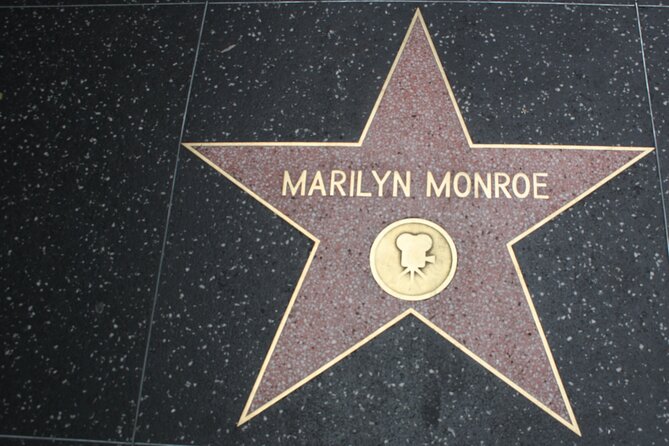
- Walk of Fame facts grounded in the sidewalk’s 1960 origins and its mix of movie stars, musicians, radio personalities, and fictional characters
- Movie-palace stops like Grauman’s Chinese Theatre and Grauman’s Egyptian Theatre, where classic Hollywood ceremony becomes part of your route
- A guide who can connect dots, with examples like Éloi using humor and Mark sharing film-industry perspective from inside the business
- Close-to-the-action pacing, with an intimate group setup that leaves room for questions
How a 2.5-hour Hollywood walk stays focused (and not random)
Hollywood can feel like a theme park made of billboards. This tour works because it picks a line through the chaos: the sign, the boulevard, then the theaters, then the old-school glamour at the Roosevelt. You are not just sightseeing. You are getting the through-story of how one Hollywood block became a global symbol for movies.
The pace is built for traction. You start at 6815 Hollywood Blvd and you meet at the Metro Hollywood/Highland area, then you move stop to stop with short guided segments. That matters because it keeps you from burning time in transit with no payoff.
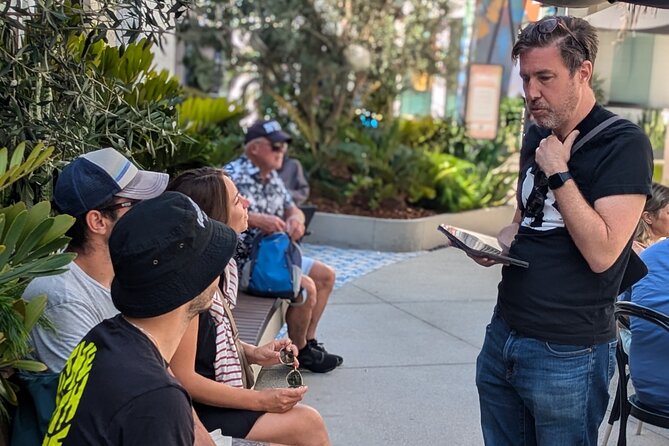
The other reason it works is the people running it. The experience is led by a live guide in English or French, and the best part is how they turn famous places into understandable stories. In the feedback you can see the difference between a guide who recites facts and one who makes you care. Éloi, for example, is credited for humor plus strong knowledge, while Mark stands out because he can add extra context about how the film industry and movie operations work.
You can also read our reviews of more historical tours in Los Angeles



Meeting point on Hollywood Boulevard, and how to show up ready
This is one of those tours where your start matters. You meet in front of the elevator at the entrance of the Metro Station Hollywood/Highland on Hollywood Boulevard. Arrive about 15 minutes early, since you want a smooth start and time to get grouped up.
Plan for the tour’s physical reality. Even though it is only about 2.5 hours, the walking adds up. Comfortable shoes are not optional advice here, they are the difference between enjoying the stops and constantly wishing you were done.
If weather is iffy, check the forecast. You will be outside for a good stretch, and you are moving between landmarks rather than sitting indoors.
Hollywood Sign viewpoints: from Hollywoodland to a comeback
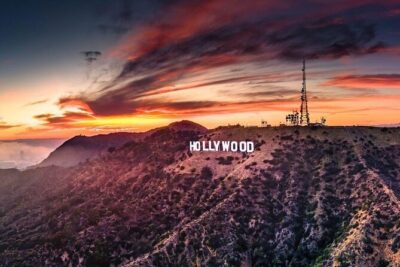
Most Hollywood sightseeing starts with a postcard. This tour starts with something more useful: a viewpoint and a timeline. You begin with panoramic views of the Hollywood Sign, originally built in 1923 under the name Hollywoodland.
From there, you hear the kind of story that makes the sign feel less like a static icon and more like a stubborn part of the city’s identity. The key points include how the sign faced near-demolition and how it later received major restoration efforts, with notable figures tied to the process, including Alice Cooper and Hugh Hefner.
Why this matters for you: the Hollywood Sign is the easiest thing to photograph and the easiest thing to misunderstand. Starting here gives you a reference point before you hit the sidewalk. When you later see theaters and stars, you understand the scale of what Hollywood wanted to build, and what it fought to keep.
Hollywood Boulevard’s shift from street to theater address
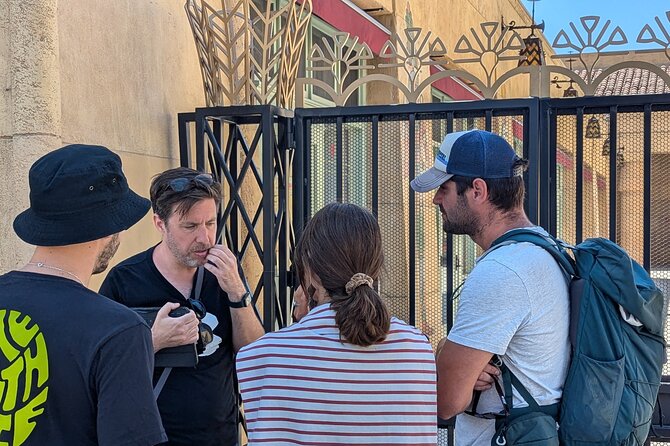
Once you move off the sign, the tour tracks the evolution of the area as Hollywood’s center of gravity changed. You walk along Hollywood Boulevard and you get the story of how it grew from a quieter street into a thriving theater district.
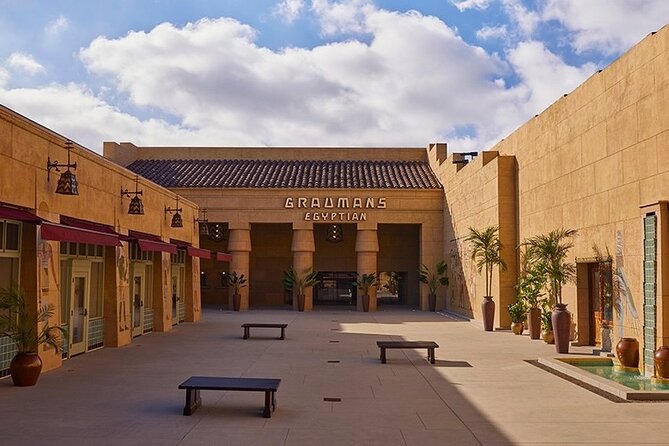
This is where you start learning the difference between Hollywood as an idea and Hollywood as a place with architecture, businesses, and changing eras. The guide helps you notice the built environment, not just the famous names. You are also shown historic theater connections, including Grauman’s Egyptian Theatre, which is described as having hosted Hollywood’s first red carpet.
One practical note: the boulevard is long, and this tour includes some transitions. You spend time walking segments, including a stop area at Ovation, Hollywood. Think of that as a setup moment so you can keep your footing and your bearings as the tour starts stacking major landmarks.
Walk of Fame: 1960 origins and stars you might not expect
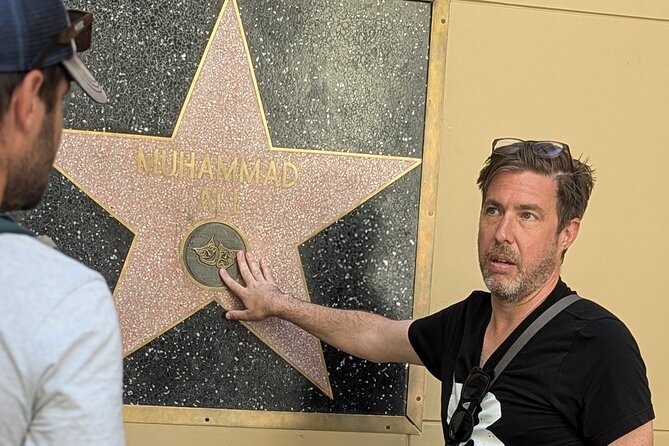
Then you hit the star sidewalk, and the tour handles it the right way. You do not just stroll. You learn the origins in 1960, so the Walk of Fame starts making sense as a cultural design, not random glitter.
You also learn how the star system honors more than movie legends. The Walk includes musicians, radio personalities, and fictional characters, with examples given like Mickey Mouse and Godzilla.
Why this stop is worth 10 minutes of guided focus: the Walk of Fame can turn into a scavenger hunt where you miss the meaning. With the origins explained, you know what you are looking at and why it looks the way it does.
If you like photography, this is also one of the easiest stretches to frame shots. Bring your camera, and pay attention to how the guide points out which areas tend to pack the most story density.



Grauman’s Egyptian Theatre: the red-carpet moment that shaped Hollywood
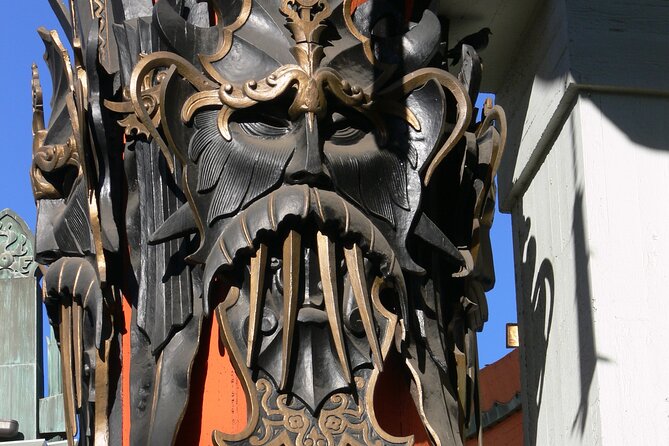
Next up is Grauman’s Egyptian Theatre, one of the iconic movie-palace stops that anchors the older style of Hollywood glamour. You get time for sightseeing and storytelling, including the idea that the theater is tied to Hollywood’s first red carpet tradition, plus the kind of theater history that makes this whole stretch feel different from modern shopping strips.
The value here for you is scale. Movie palaces can look like ornate buildings on a screen. Up close, they read like real places that hosted real ceremonies. When you hear about the red carpet tradition starting here, you understand why Hollywood’s image-making rituals became part of the brand.
Also, there is a timing advantage. A stop like this early in the tour helps you shift from “I recognize this” into “I understand why this exists.”
Dolby Theatre: stepping into Hollywood’s modern stage
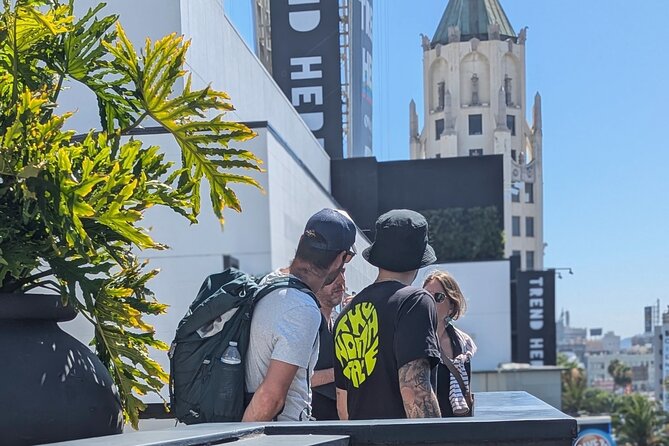
After the older theater storytelling, the tour includes a stop at Dolby Theatre. You get a guided visit time, and it acts as a bridge between classic movie-palace prestige and Hollywood’s current spotlight.
Even with limited details given for this specific stop, the structure of the tour helps. You have already learned how entertainment branding became a spectacle. Now you are in the middle of Hollywood’s ongoing performance culture. It is a good moment to connect the past and present without turning it into a history lecture.
If you want photos, this is a stop where your camera will help, but your eyes should do the work too. Look at how the street energy and the theater identity blend, because that blending is part of why Hollywood stays Hollywood.
TCL Chinese Theatre: 1927 handprints and what they mean
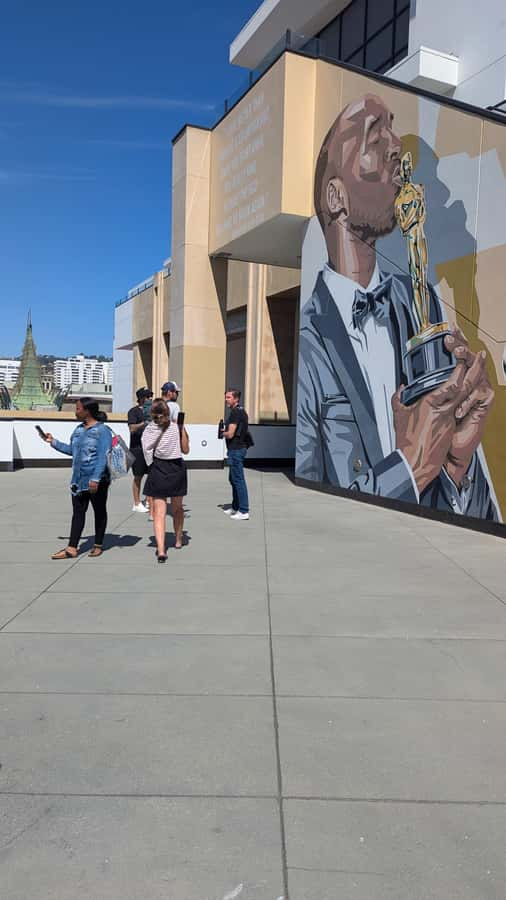
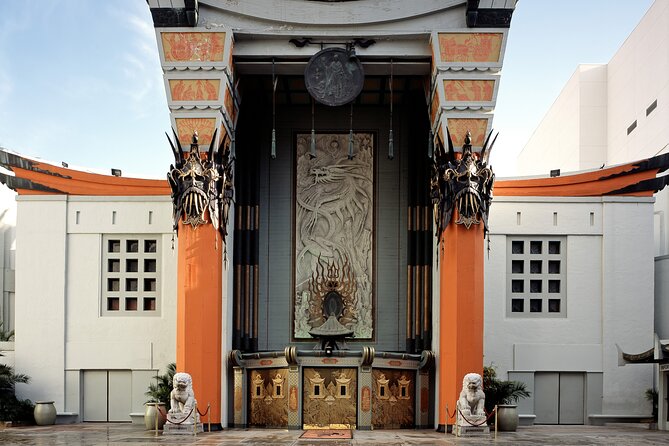
One of the most memorable stops is TCL Chinese Theatre. This is where the tour turns legend into something you can physically see. You get a guided segment focused on the theater and its famous grand opening in 1927, when it introduced the tradition of celebrity handprints and footprints pressed into cement.
That tradition is why people walk up to the steps in the first place. It is interactive fame, the kind that makes history feel touchable.
The guide also shares the idea that stars including Marilyn Monroe, Harrison Ford, and even R2-D2 left their marks here. That list matters because it signals the theater’s reach across eras and screen styles.
Why this stop is a standout for most people: it turns “movie history” from an abstract concept into a literal walkable artifact. If you like concrete details, this is the one you will probably remember longer than the photos.
Musso & Frank Grill: old-school Hollywood stories in a single location
The tour’s Hollywood Boulevard walk also includes story content tied to Musso & Frank Grill, described as Hollywood’s oldest restaurant and a place frequented by big names like Chaplin, Bogart, and Marilyn Monroe.
This stop is important less for what you might order and more for how it connects the entertainment world across generations. You also hear a specific foodie milestone tied to the U.S. introduction of fettuccine Alfredo, brought over by Hollywood royalty Mary Pickford and Douglas Fairbanks.
If you are the kind of person who likes seeing how movie culture spills into daily life, this is a great addition. It’s also a reminder that Hollywood was never only about theaters. It was about writers, actors, and dinners where deals and ideas could happen.
Hollywood Roosevelt: ending with Academy Awards and Spanish Colonial glamour
You finish at the Hollywood Roosevelt, which the tour highlights as the site of Hollywood’s first Academy Awards ceremony. This matters because the Roosevelt is not just a pretty building. It is tied to the early story of how Hollywood recognized itself on a formal stage.
The description also points to Spanish Colonial Revival character, plus the fact that the hotel was home to stars like Marilyn Monroe. You get a guided visit time that keeps the emphasis on interiors and that old-Hollywood feel.
Why ending here works: after theaters and sidewalks, the Roosevelt gives you a final mood shift. It is a closing chapter that explains why the glamour was never accidental. It was designed, staged, and sustained.
Price and value: what $35 buys you in the real world
At $35 per person for about 150 minutes, this walking tour is priced in the reasonable middle for a Hollywood experience. The value comes from three things you are actually getting:
- An expert local guide who tells stories tied to the places you are standing in
- An intimate group setting, which makes questions possible instead of feeling like you are watching from far away
- Multiple iconic stops packed into one route, so you do not waste a day piecing it together yourself
In the feedback, the guide quality is the standout theme. People mention humor and knowledge from Éloi, and extra operational context from Mark based on film-industry experience. When that kind of guide energy shows up, $35 feels like you paid for access, not just time on the street.
Who should book this Hollywood Boulevard tour?
Book it if you want your Hollywood day to feel coherent, not random. It is a good fit for movie lovers who want context behind famous landmarks, and for history-minded travelers who like learning the “why” behind the “wow.”
It is also a strong choice if you like small group interaction. The tour is set up for questions and personalized conversation, which is a big deal in areas where self-guided sightseeing can turn into a blur.
You might think twice if you are not up for a steady walking pace. This is a walking route with multiple landmark stops, and the recommendation is clear: wear comfortable shoes and plan around the weather.
Should you book this tour?
If you want the classic Hollywood icons plus the story connections that make them mean something, I think this is a solid yes. You are spending your time at the Hollywood Sign, Walk of Fame, Grauman’s Egyptian Theatre, Dolby Theatre, TCL Chinese Theatre, and the Hollywood Roosevelt, all with an experienced guide in English or French.
My practical advice: book if you want a guided line through Hollywood’s most photographed places, and you would rather spend $35 on direction and context than wander hoping you find the right details on your own.
FAQ
How long is the Historic Hollywood Boulevard and Movie Palaces Walking Tour?
It lasts about 150 minutes.
How much does the tour cost?
The price is $35 per person.
Where do I meet the tour guide?
You meet in front of the elevator at the entrance of the Metro Station Hollywood/Highland on Hollywood Boulevard.
What’s included in the tour?
A live local guide is included.
What languages are the tours offered in?
The tour is available in English and French.
Is free cancellation available?
Yes, you can cancel up to 24 hours in advance for a full refund.
More Historical Tours in Los Angeles
More Tours in Los Angeles

More Tour Reviews in Los Angeles
Not for you? Here's more nearby things to do in Los Angeles we have reviewed









Hollywood Tours, compared.
 ★ 4.6Warner Bros. Studio Tour HollywoodFrom $767,191 reviews
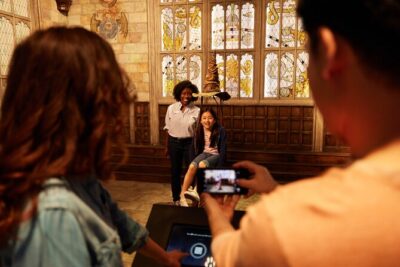
 ★ 5.0Full-Day Iconic Sights of LA, Hollywood, Beverly Hills, Beaches and MoreFrom $996,147 reviews
 ★ 4.5Warner Bros. Studio Tour HollywoodFrom $765,246 reviews
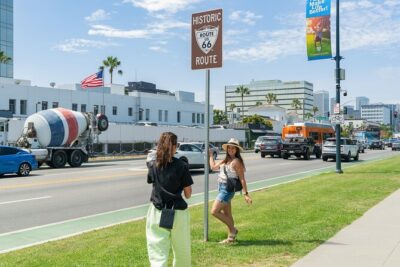 ★ 5.0Hollywood, Beverly Hills & Celebrity Homes Tour by Open Air BusFrom $392,557 reviews
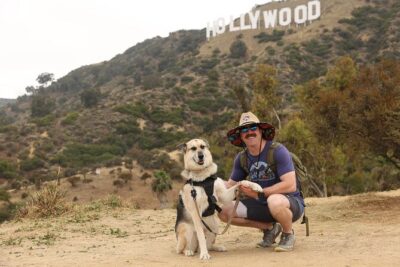 ★ 5.0Hollywood Sign 2.5-Hour Tour with Comedians and Their DogsFrom $152,496 reviews
 ★ 5.0Full-Day LA Tour: Santa Monica, Hollywood and Beverly HillsFrom $952,431 reviews
 ★ 4.5Hollywood and Celebrity Homes Bus TourFrom $392,074 reviews
 ★ 4.5Hollywood Open Bus ToursFrom $301,801 reviews
Browse the lists this tour appears in