
Reviewed · HOLLYWOOD TOURS
Historic Hollywood Boulevard and Movie Palaces Walking Tour
Hollywood looks different when you walk with a guide. This 2.5-hour Hollywood Boulevard walk turns big-name landmarks into a clear film-history story, with stops built around iconic views and iconic buildings, starting near Ovation Hollywood.
I especially love the way the tour connects the Hollywood Sign to the real people and moments that saved it, then carries that momentum into the theater district’s rise and revival. I also love the classic-to-modern mix, from the Egyptian Theatre’s movie-palace flair to a walk right on the Dolby Theatre Oscars red-carpet area.
One possible drawback: it is a walk with lots of outside time, so comfort depends on weather. If the skies are rough, you may feel it in your legs, and the tour can be adjusted or canceled for poor conditions.
Key highlights you should care about
- Hollywood Sign history with names: you’ll hear how an ad from 1923 became the symbol everyone knows today, including the celebrities tied to keeping it alive.
- Rooftop views that put the boulevard in context: you get a high-angle look that helps you understand why this stretch became the theater district.
- Movie palace architecture, explained simply: Egyptian Revival design, Neo-Gothic details, and why each building looks the way it does.
- Real film locations in a short loop: the Las Palmas Hotel stop ties Hollywood Boulevard to well-known on-screen scenes.
- Handprints and Oscars red carpet moments: the Chinese Theatre tradition and the Dolby Theatre Oscars area give you easy photo targets with story behind them.
Where the tour starts, and what the small-group format means
The meeting point is at 6815 Hollywood Blvd. From there, you’ll move through central Hollywood at a pace that is made for short stops and quick stories, not marathon sightseeing.
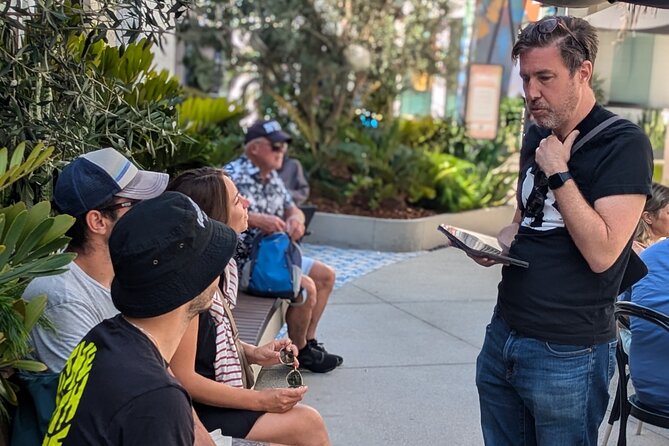
The group is capped at 15 travelers, which matters more than you’d think. With a smaller group, your guide can keep everyone together while still giving you useful context, like why the boulevard changed over time and how these venues shaped what Hollywood became. You’ll also get a more personal vibe when it comes to questions and photo stops.
It’s also offered in English, and you’ll use a mobile ticket. That is handy because it keeps things simple right when you meet up. And yes, service animals are allowed, which is a big plus if you need that accommodation.
You can also read our reviews of more historical tours in Los Angeles



Getting your bearings at Ovation Hollywood and the Hollywood Sign era
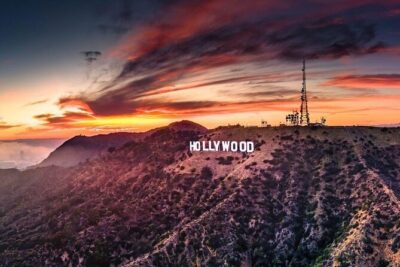
The tour starts with a look at the Hollywood Sign from the Ovation Hollywood area. This is a smart first stop because it gives you the big visual anchor right away, then your guide builds the story around it.
You’ll hear about the sign’s origin as an ad, Hollywoodland, and how the symbol transformed into something way bigger than advertising. The most memorable part is the human element, including the celebrities credited with helping preserve it. You also get the sense that the Hollywood you see today is not just entertainment, it is something people fought to protect.
The sign viewpoint is your first “OK, now I get it” moment. Without that, the later theaters and street corners can feel like a long list of famous facades. With the sign as a starting point, the whole walk has a stronger thread.
Next, you’ll revisit the sign itself for more context. This extra focus is useful because it turns a photo stop into a mini lesson: what the sign means, how it survived, and why it became the global shorthand for Los Angeles style and Hollywood myth-making.
Practical tip: bring sunglasses even if it is cloudy. Hollywood Sign photo angles can still be bright, and your eyes will thank you during quick rooftop and street-level moments.
Hollywood Boulevard’s shift from streets to theater district
After the sign stories, you move into the stretch where Hollywood Boulevard became the heart of LA’s theater culture.
One of the most helpful pieces here is the explanation of how the boulevard evolved over time. You’ll hear that it started as a different kind of street, and then in the early 1900s it grew into a central Theater District corridor. The tour connects the dots between changing eras, like boom periods, downturns, and later revivals.
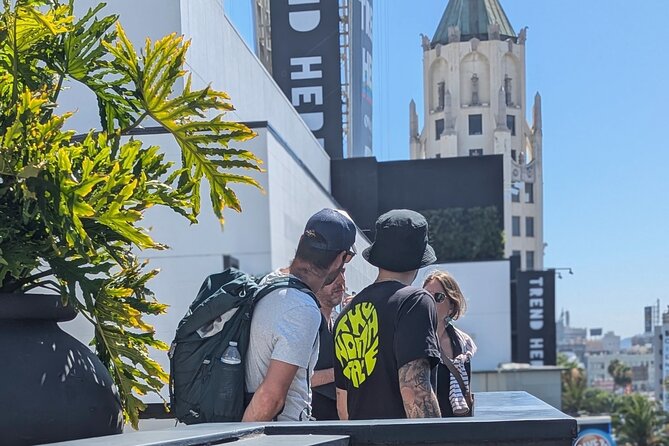
The Walk of Fame segment is also there for a reason, not just for the usual celebrity names. You’ll take in sweeping views from the Ovation Mall rooftop, and that elevated angle helps you see why this area is laid out the way it is. It also makes it easier to understand where the theater palaces sit in relation to the street grid and crowds.
You’ll likely come away with a better “mental map” of Hollywood Boulevard. That is valuable on your first visit, but it also helps if you plan to wander afterward on your own. You will not just know where the famous sights are, you’ll understand why they cluster here.
The Art Deco Hollywood relic you can spot in minutes
The tour quickly shifts from big landmarks to a more detailed, architecture-focused vibe. You’ll pause at a grand Art Deco structure with Neo-Gothic details that acts like a Hollywood relic.
This is one of those stops that improves your whole experience, because it trains your eye. Movie palaces often look dramatic because they are built to. They are meant to signal, even before you enter, that something special is about to happen. When you learn what you are looking at, you stop treating the buildings like background scenery.
If you like street-level design and the way Hollywood buildings tell stories through materials and shape, this stop hits.
If you do not care about architecture, it can feel like a breather before the next theater. Still, it is brief enough that you likely won’t mind the stop.
Las Palmas Hotel, and why film locations matter
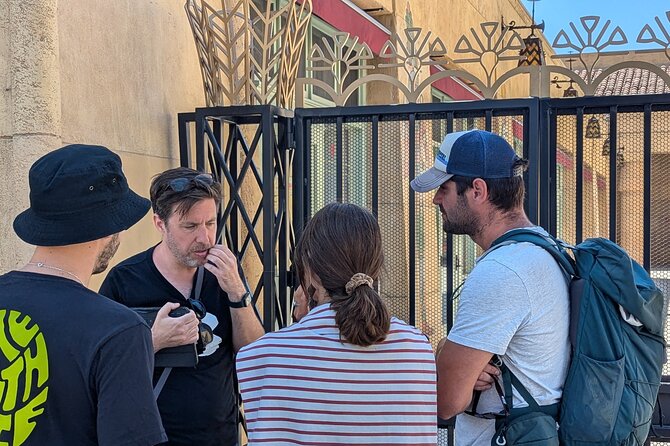
Next up is the Las Palmas Hotel stop. You’ll visit a filming location tied to Pretty Woman, and your guide will share stories behind the historic site.
This is where the tour becomes more than “architecture trivia.” A real filming location helps you picture scenes in your mind, and it makes Hollywood’s film past feel less abstract. Instead of reading about cinema history, you stand where it happened.
Even if you are not a Pretty Woman superfan, the value is still there. Film locations help you connect the boulevard’s glamour to real places, not just legends. They also give you a concrete reason to slow down and look at a building closely, rather than snapping a quick photo and moving on.
Practical tip: if you want strong photos here, be mindful of foot traffic. The area is popular, and you will get better results if you choose one moment to shoot and then let people pass.


Egyptian Theatre: movie palace storytelling, from King Tut inspiration
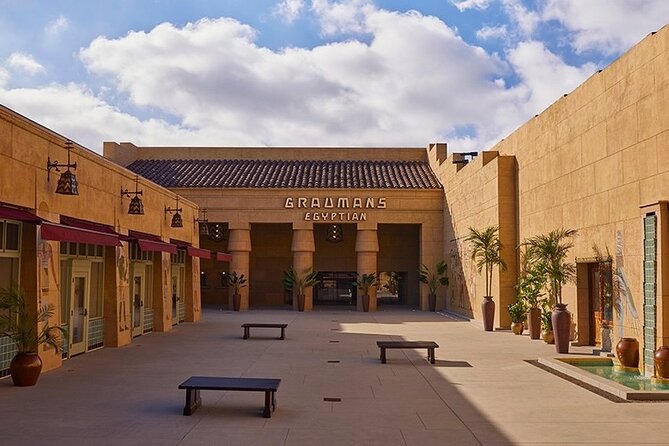
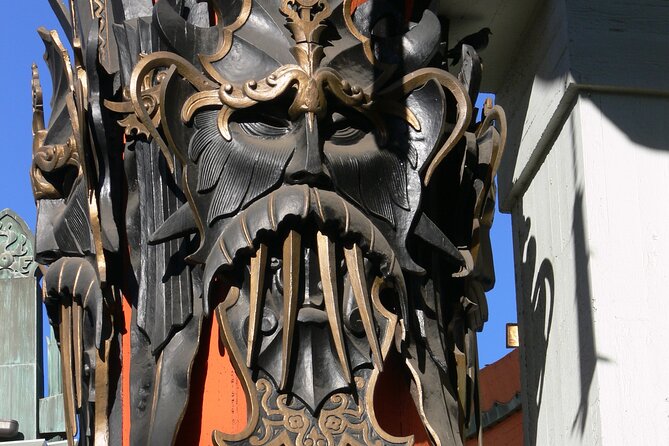
The Egyptian Theatre is one of the true “wow” stops on this walk. This venue is Hollywood’s early movie palace, and the design reflects a fascination with Ancient Egypt.
Your guide will explain the Egyptian Revival style, including inspiration linked to King Tut’s discovery. That connection is important because it explains the time period mindset. The Egyptian look was not random decoration. It was a way to market spectacle, luxury, and something exotic to moviegoers who wanted to feel transported.
You’ll spend enough time here to actually look at the details. That matters, because the best part of a movie palace is rarely the main entrance only. It is the layers of design that make the building feel like a stage even before the show starts.
Possible drawback: if you prefer your film knowledge to be heavy on plot and less on design, you may want to pay extra attention to how your guide ties style to the audience experience.
El Capitan Theatre, Disney premieres, and classic Hollywood names
From the Egyptian Theatre you’ll move to the El Capitan Theatre, another key player in the movie-palace story.
Here, you’ll hear about the theatre’s role as the home of Disney premieres, and you’ll also connect it to a major classic moment, including the debut of Citizen Kane. That combination is clever, because it shows how one venue can carry multiple Hollywood eras.
You get a sense of continuity. Even if the studios and audiences change over time, the big palaces still matter because they act like cultural landmarks. They bring prestige, attention, and a sense of occasion.
Time-wise, this stop is a quick but satisfying one. You should be ready to look around and take a few photos without rushing, but keep moving so you don’t fall behind the group.
Jimmy Kimmel Live! and the Hollywood Masonic Temple connection
Next is the Hollywood Masonic Temple (1921), now home to Jimmy Kimmel Live! You’ll learn about the famous Masons of Hollywood, and this is a fascinating pivot from “movie industry glamour” into something more civic and historical.
Why it works: the entertainment industry does not exist in a vacuum. People organize communities, build institutions, and use influence in ways that show up later as venues and cultural hubs.
This stop is also a good reminder that Hollywood is not only movie posters and celebrity sightings. It’s also organizations, architecture, and people who helped shape the industry’s power structure.
If you like your Hollywood story with a side of how the town worked, you’ll probably enjoy this part more than you expect.
TCL Chinese Theatres and the handprint tradition
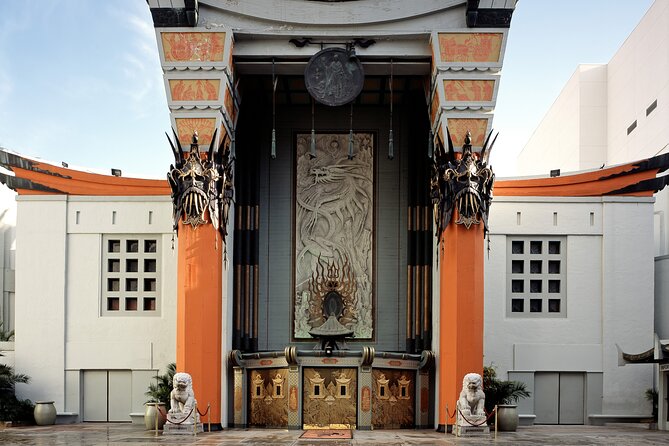
The walk continues to TCL Chinese Theatres, formerly known as Grauman’s Chinese Theatre. This is the stop most people picture first when they think of Hollywood icons.
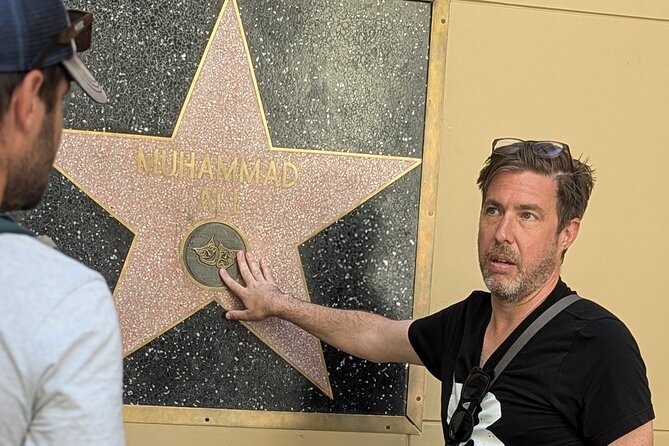
You’ll learn about the handprint tradition that began at the theater. Then you’ll see the imprints left by major stars, with examples spanning from Marilyn Monroe to Harrison Ford.
What I like about this stop is that it is tangible. You are not just hearing names. You are looking at physical marks in concrete, a tradition that makes movie fandom feel oddly personal. It also gives you a clear photo target, even if you are not into selfies.
If the area is crowded, treat it like a quick mission: look, shoot, and move. The tour flow is designed so you still get value without spending too long in a bottleneck.
Dolby Theatre and the Oscars red carpet moment
The Dolby Theatre stop is the big “this is why you came” finale-style segment. You’ll walk the iconic Oscars red carpet area connected to the Academy Awards, and the guide will frame it in a way that helps you understand what it means for Hollywood to stage that level of recognition here.
This is valuable even if you have already seen photos online. Being on the actual carpet line gives you scale. It also makes the surrounding theaters and street energy feel more real, because awards season is not just a TV event. It is tied to specific places and specific crowds.
Time here is long enough to soak it in, but short enough that you won’t feel like you stalled in one spot.
The Hollywood Roosevelt, Marilyn Monroe, and early Oscars
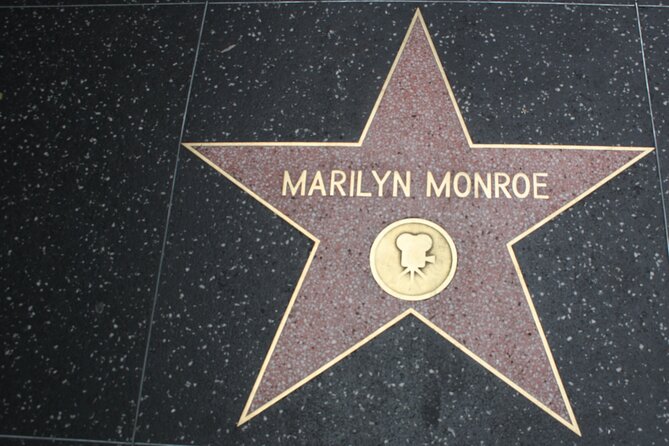
The final major stop is the Hollywood Roosevelt. This is described as Hollywood’s oldest continuously operating hotel, and you’ll hear about its connection to early Oscars as well as the fact that Marilyn Monroe once lived there.
This hotel stop is a nice change of pace after the theatre-focused segments. It reminds you that Hollywood glamour is not only about stages. It is also about where stars stay, where people gather, and where deals get made.
You get a sense of layering: movie palaces for the public spectacle, and hotels for the personal side of the industry. Together, they make Hollywood feel less like a theme park and more like a lived-in city.
Price and value for a film-history walking tour
At $30 per person for about 2 hours 30 minutes, this tour sits in the budget-friendly range for guided walking experiences in Los Angeles. The value mainly comes from how much it covers in one loop, plus the fact that the listed stops do not come with separate admissions called out for each stop.
You also get a local guide, and the group size cap helps that guide deliver real context instead of rushing through everyone’s questions.
Is it perfect value? For most first-timers and film-lovers, yes, because you leave with:
- a clearer mental map of Hollywood Boulevard,
- a set of architectural and film-history story threads,
- and several major photo moments with explanations attached.
If you already know Hollywood theater history in depth, you might find some parts move quickly. But even then, the mix of landmarks makes it a solid “orientation plus highlights” package.
Who should book, and who might want a different style of tour
This is a good fit if:
- you love film history and want it explained in plain language,
- you like movie palaces and architecture,
- you want a guided overview that helps you explore independently afterward.
It may not be ideal if:
- you want heavy museum-style time or long interior visits,
- you dislike walking or tight group schedules,
- you are visiting during very hot weather and want more shade time, since the tour is built around outdoor viewpoints and street-level stops.
Good news: it says most travelers can participate, so it is not designed to be extreme. Still, comfort planning matters because it is a lot of ground in one session.
Should you book this Historic Hollywood Boulevard walking tour?
I’d book it if you want the easiest way to understand why Hollywood Boulevard looks the way it does, and how the major movie palaces became cultural symbols. The small group size, English guide, and mix of practical orientation plus memorable story stops make it a strong first-day choice.
Skip it if your ideal LA day is mostly carless, sit-down sightseeing with long indoor time. This tour is built for moving, looking, and learning while you walk.
FAQ
How long is the Hollywood Boulevard and movie palaces walking tour?
It runs for about 2 hours 30 minutes.
What is the price per person?
The price is $30.00 per person.
Is the tour offered in English?
Yes, the tour is offered in English.
What is the group size limit?
The tour has a maximum of 15 travelers.
Where does the tour meet?
The tour starts at 6815 Hollywood Blvd, Los Angeles, CA 90028, USA.
Is admission included at the stops?
The stops are listed with admission ticket free, so you should not expect separate admission fees for these specific stops as part of the tour.
Are service animals allowed on this tour?
Yes, service animals are allowed.
What is the cancellation policy if I need to change plans?
You can cancel for a full refund if you do it at least 24 hours before the start time. If it is canceled due to poor weather, you will be offered a different date or a full refund. If you cancel less than 24 hours before, it is not refunded.
More Historical Tours in Los Angeles
More Tours in Los Angeles

More Tour Reviews in Los Angeles
Not for you? Here's more nearby things to do in Los Angeles we have reviewed







Hollywood Tours, compared.
 ★ 4.6Warner Bros. Studio Tour HollywoodFrom $767,191 reviews
 ★ 5.0Full-Day Iconic Sights of LA, Hollywood, Beverly Hills, Beaches and MoreFrom $996,147 reviews
 ★ 4.5Warner Bros. Studio Tour HollywoodFrom $765,246 reviews
 ★ 5.0Hollywood, Beverly Hills & Celebrity Homes Tour by Open Air BusFrom $392,557 reviews
 ★ 5.0Hollywood Sign 2.5-Hour Tour with Comedians and Their DogsFrom $152,496 reviews
 ★ 5.0Full-Day LA Tour: Santa Monica, Hollywood and Beverly HillsFrom $952,431 reviews
 ★ 4.5Hollywood and Celebrity Homes Bus TourFrom $392,074 reviews
 ★ 4.5Hollywood Open Bus ToursFrom $301,801 reviews
Browse the lists this tour appears in