
Reviewed · LOS ANGELES CITY TOURS
Downtown Los Angeles : Historic district & Little Tokyo
Downtown LA can feel like a movie set in daylight. This small-group walk turns Downtown LA into a story you can actually follow, from Broadway’s old cinema glamour to the modern architecture people line up to see today. I especially liked the way the guide connects the streets to big-picture themes like immigration, design, and how the city’s center changed over time, and I also liked the pace of the walking circuit with frequent stops where you know what to look at. One thing to consider: this is a lot of ground on foot in about three and a half hours, so comfy shoes really matter.
My favorite parts were the contrast stops: Grand Central Market shows how many cultures can share one block, and Little Tokyo feels like a real change of scene in just a few streets. The French guide also keeps things friendly in small group mode, so questions do not get lost. The only potential drawback is that the tour is rain or shine, so plan for weather and expect you will still be walking.
If your goal is to get oriented fast and see the most meaningful Downtown LA and Little Tokyo highlights without guesswork, this half-day circuit is a smart move. Just know you will be in motion, and you will likely want a plan for where to eat right after you finish in Little Tokyo.
Key takeaways before you go
- Small group, max 10 people, so you get more personal attention from your French guide
- Grand Central Market + Historic Core + Financial District + Civic Center, all on foot in one logical loop
- Downtown architecture focus, including major modern landmarks like the Broad Museum and Walt Disney Concert Hall
- Little Tokyo at the end, a tight four-block Japanese concentration around Japanese Village Plaza
- Practical add-ons included, like a map of best addresses plus an email reminder and souvenir photo
From Blue Bottle to Downtown LA’s front row
Your tour starts outside Blue Bottle Coffee at 300 S Broadway. It is a handy meeting spot, easy to find and very recognizable, and your guide will be waiting there wearing a Los Angeles Off Road tote-bag. If you are the type who likes to arrive early and not feel rushed, I’d give yourself a little extra time to locate the group and settle your bearings.
This whole experience is designed around walking. That sounds obvious, but it changes how you experience the city. You do not just point at buildings from a distance, you see how the streets lead into the neighborhoods, where the city opens up, and where it tightens. Downtown LA can be confusing on your own, because different parts of the center feel like separate cities. This route stitches them together.
You also get a French-speaking guide, which matters if you want more than quick facts. The guide’s job is to help you connect the dots, from cinema-era Broadway to the creative energy that has returned to Downtown in recent decades.
Bring comfortable shoes and expect rain or shine. No skipping the walking portion if the weather turns. A light layer is smart, and you’ll want clothes you can move in.
You can also read our reviews of more historical tours in Los Angeles



Grand Central Market: heritage meets lunch energy
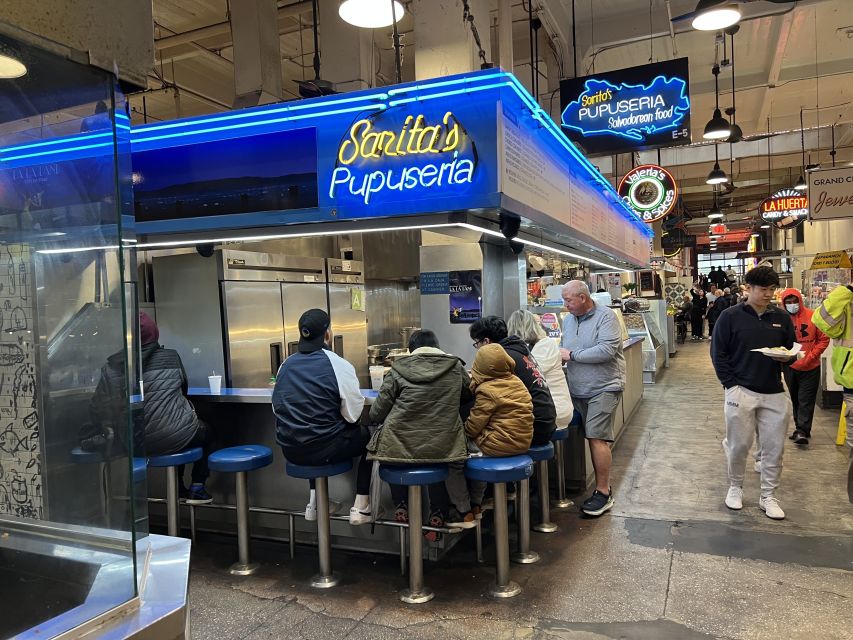
One of the first stops is Grand Central Market. It is on the list of heritage sites since 1917, and you feel that history in the way the market works as a long-running public space. This is not just a place to photograph a sign. It is a functioning food hub with many kiosks, which makes it one of the easiest ways to understand Downtown LA’s cultural diversity without reading a book first.
What I like about starting here is timing and mood. Markets are naturally “people places,” so you get a real sense of daily life before you head into the more narrative parts of the walk. You can also use the market as a reference point for the rest of the day. Once you’ve seen the area around it, the nearby blocks in the Historic Core and Civic Center start to make more sense.
If you have dietary preferences, keep expectations simple. The tour does not include beverages, and it does not spell out food options. But even if you do not plan to eat right then, you’ll get plenty of inspiration for later.
Historic Core: Broadway’s early cinema era in real space
Next comes the Historic Core. This is where you start seeing why Downtown LA has such a strong connection to West Coast cinema. Broadway, in the early days, hosted major movie premieres, and the avenue had more than a dozen cinemas. You will be looking at architecture that reflects that entertainment past, including Art Deco and Beaux Arts styles.
Here is the practical value: when you learn how these buildings earned their prestige, they stop being random facades. You understand the logic behind what’s where. A theater is not just a theater, it was a landmark people used to arrive at, meet at, and show up for. That’s why the architecture details matter. They were part of the show.
If you like photo stops, this is a good stretch to slow down your pace. Look up as much as you look forward. You are walking through a district where the city’s story is literally in the buildings.
Financial District on foot: when offices left, something else returned
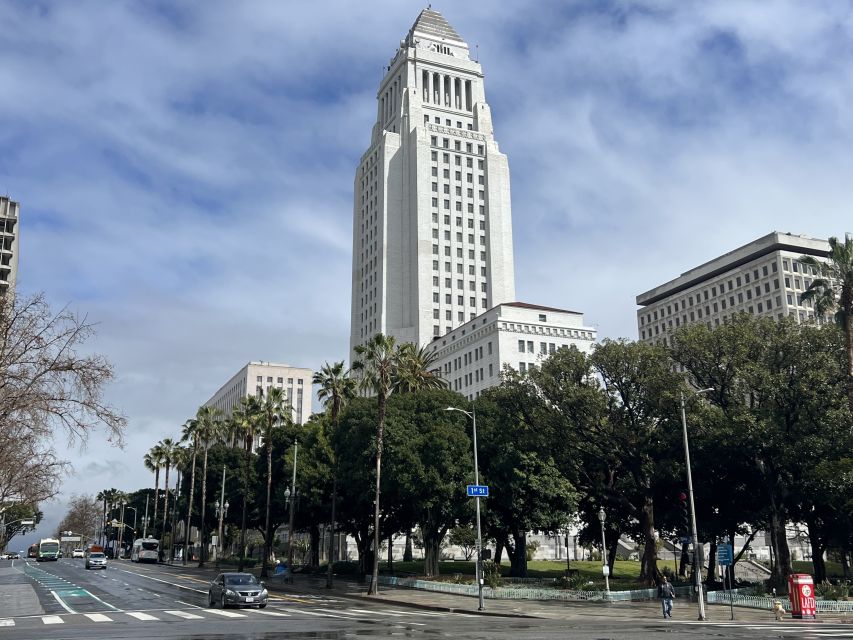
Then you move into the Financial District. Downtown LA was the historic heart of the city and the main business zone. But until the early 2000s, it was known for emptying out after office hours, which can make a “city center” feel dead if you only experience evenings.
The tour’s framing is useful because it gives you context for what you see now. For the past 15 years, architecturally striking buildings have stood side by side with world-renowned museums and sold-out shows. That shift is exactly what makes Downtown feel different than it used to.
This is also where you start noticing why the modern architecture stops are worth your time. A walk like this helps you understand how Downtown LA became both a workday hub and a cultural destination. Without that context, it’s easy to miss the point of the buildings beyond their Instagram appeal.
Bunker Hill: the city’s layers and sightlines
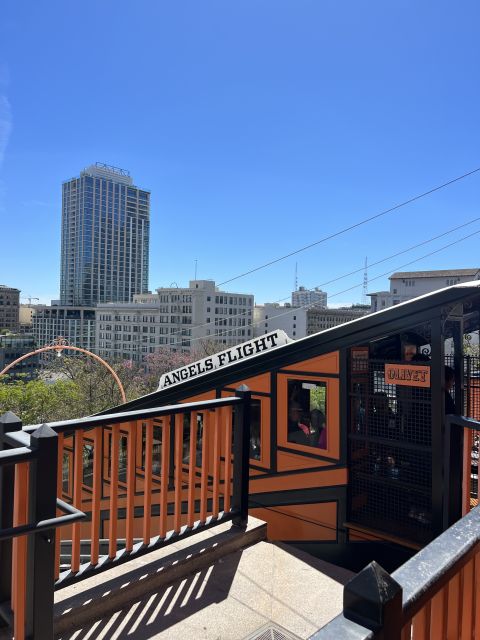
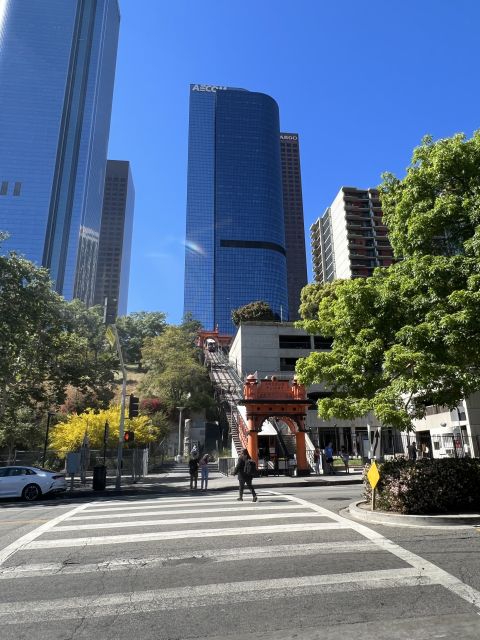
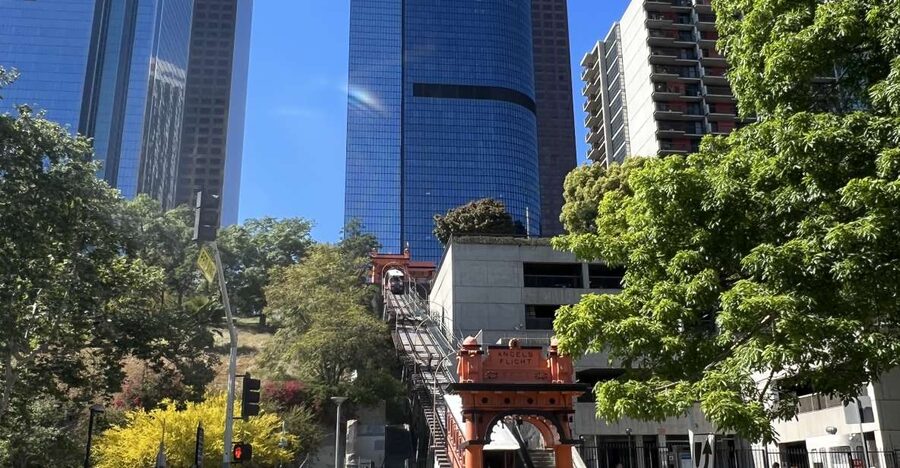
Bunker Hill is another guided segment. It helps you see Downtown LA as layered, not flat. The name itself hints at a neighborhood shaped by change and elevation, and the tour gives you a route that helps you understand how the city’s center has evolved block by block.
What to do during this stretch is simple: keep your eyes moving. Watch how streets funnel you toward different viewpoints, and note how nearby buildings relate to each other. This is one of those areas where you start to feel the “big city” scale. If you are used to sprawling neighborhoods, Downtown’s density can feel intense, but it also makes it easier to spot landmarks once you know what direction you are facing.
A small-group format helps here. When you walk with a group of up to 10, you get enough space to stop and look without the whole day feeling like a traffic jam.



Civic Center: where public life shows up in architecture
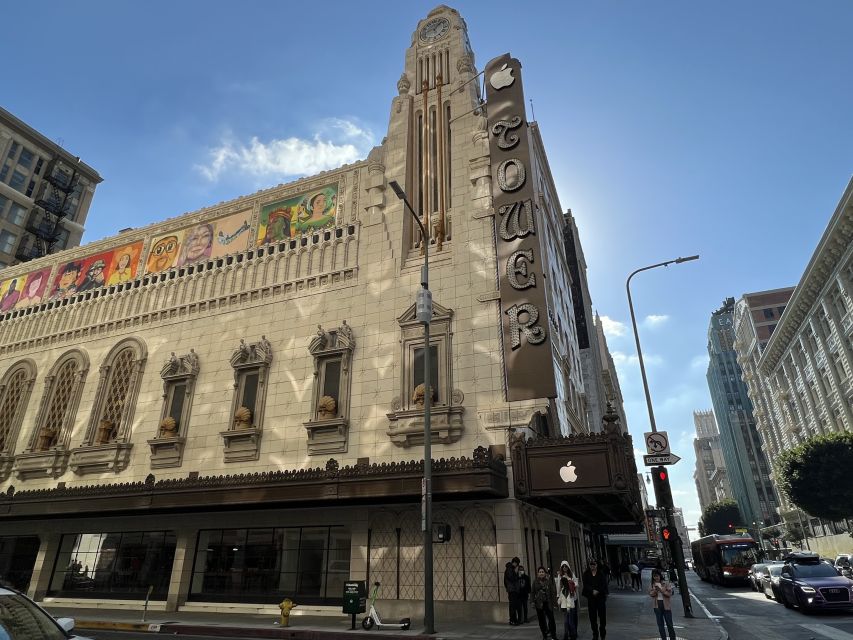
Next is the Civic Center. This area is all about the city’s public side, and the architecture reflects that role. Even if you are not a museum person, Civic Center buildings tend to communicate importance through form, scale, and placement.
This stop matters because it rounds out the “why” behind Downtown LA. Historic Core and Broadway explain entertainment prestige. Financial District explains business power. Civic Center explains public identity. Together, they give you a more complete picture of what Downtown LA is supposed to be.
Keep an eye out for visual symmetry and monumental proportions. Civic architecture is rarely accidental. It’s meant to be seen, and it’s meant to last.
Modern architecture highlights: Broad Museum and Walt Disney Concert Hall
One of the reasons this tour earns a strong reputation is the emphasis on modern design, especially the contrast with the older areas you’ve already walked. The route explicitly includes major architecture draws like the Broad Museum and Walt Disney Concert Hall, both associated with modern, high-profile Downtown LA cultural energy.
Here’s how to get value from this part of the experience: don’t treat it like a list of famous names. Use what you learned earlier. Broadway connected cinema glamour with Art Deco and Beaux Arts traditions. The modern landmarks show another chapter, where architecture signals a city actively reinventing its identity.
If you enjoy architecture, take extra care with your photos here. Modern buildings can look different depending on the angle, and walking keeps you from getting stuck in one viewpoint. A guide also helps you understand what design features people notice, so your photos look less random.
Little Tokyo change of scene in four blocks
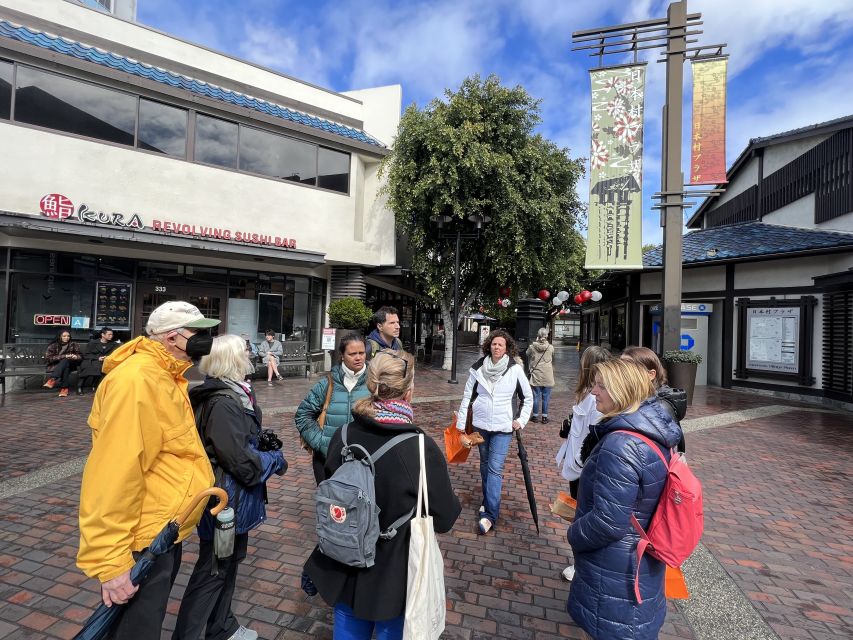
Then comes the payoff: Little Tokyo. The tour shifts you into a concentrated Japanese cultural area around Japanese Village Plaza, and you can feel the change fast. It is a smaller pocket of the city, but it has a strong identity.
This is the tour’s cultural contrast moment, and it is a good one. Little Tokyo is described as the cradle of Japanese immigration, and Japanese Village Plaza is where you see that influence expressed in daily life. You’ll spot sushi restaurants and manga stores, which makes the neighborhood feel current rather than frozen in time.
If you have never visited Little Tokyo before, you’ll probably find it a helpful reset after Downtown’s broader “big city” mood. You go from a wide range of Downtown architecture and institutions to streets that feel more focused, with a clear cultural center of gravity.
Since the tour finishes in Little Tokyo, this is also a smart place to plan your next step. It is easy to find something to eat and keep walking afterward, without needing a ride to another neighborhood.
Who this tour is best for
This works especially well if you want:
- A structured walk that makes Downtown LA feel understandable
- A blend of old and new, from Broadway’s early cinema story to modern landmarks
- A French guide and a small group setup where you can ask questions
- A quick change of scenery, so you end your day in Little Tokyo rather than back in traffic-heavy Downtown blocks
It is also a good fit for first-timers. Downtown LA can overwhelm you if you are trying to plan everything yourself. With a guided circuit, you get a clearer sense of geography and priorities.
It may be less ideal if you hate walking or if you are looking for lots of indoor time. This is a walking-focused experience with guided stops, not a sit-down museum day.
Value check: what you get for about $78
At $78 per person for 210 minutes, you are paying for three things: a live French guide, a planned walking route through multiple sub-neighborhoods, and built-in support materials.
Is that worth it? In my view, yes, if you care about getting oriented and learning the meaning behind what you see. You are not only visiting one landmark. You’re getting a route that connects Grand Central Market, the Historic Core, the Financial District, Bunker Hill, the Civic Center, and then Little Tokyo. The guided narrative is the expensive part, and the small group size helps protect it.
You also get a map with addresses of the places you visited. That is practical. It means you can find your way again later without guessing. After the tour, you receive an email reminder and a souvenir photo, which is a nice touch for keeping the day organized in your photos.
You do not get beverages or personal purchases, so budget a bit for snacks if you want them. But the core value is the guided route and the time you save figuring out what to prioritize.
Weather, shoes, and keeping the day easy
The tour runs rain or shine. That single detail changes how you should pack. Wear shoes you can trust on wet sidewalks, and bring a layer that you can handle without overheating.
You also should expect a full walking circuit. Even though it is only a bit over three hours, Downtown distances add up quickly. Set yourself up for success with comfy footwear and a water plan. The tour does not include beverages, so having your own strategy matters.
Wheelchair-friendly planning (important if you use mobility aids)
This experience is wheelchair accessible, with a circuit adapted for wheelchair users. If accessibility is a priority, that is a big positive. Still, because it is a walking route through multiple neighborhoods, you’ll want to think about endurance and comfort.
Finish in Little Tokyo: what to do next
Ending in Little Tokyo is a smart move. You land in a neighborhood with immediate options for food and browsing, including sushi and manga spots around Japanese Village Plaza. You do not have to “end the day” with an exhausting return trip just to find something to do.
If you have energy left, you can keep walking in the area at your own pace. The guide has already done the hard part, making the neighborhood feel less like a blank map and more like a place with a clear identity.
Should you book this Downtown LA and Little Tokyo tour?
Book it if you want a single half-day plan that connects Downtown LA’s cinema roots and architecture with Japanese cultural life in Little Tokyo. The small group size, the French guide, and the fact that you get an actual route through Historic Core, Financial District, Bunker Hill, and Civic Center make it a strong value for first-time visitors.
Skip or rethink it if you dislike walking, or if you are only interested in one neighborhood and want a more focused, single-area plan.
FAQ
Where does the tour start?
Meet your guide outside Blue Bottle Coffee at 300 S Broadway, Los Angeles, CA 90013.
What time does the tour last?
The tour duration is 210 minutes, about 3.5 hours.
What language is the tour guide?
The tour guide speaks French.
How large is the group?
This is a small group limited to a maximum of 10 participants.
Is the tour wheelchair accessible?
Yes, it is wheelchair accessible with a circuit adapted for wheelchair users.
Does the tour run in rain?
Yes, it takes place rain or shine.
What should I bring?
Wear comfortable shoes, since the tour is walked on foot.
Where does the tour finish?
The tour finishes in Little Tokyo.
More Historical Tours in Los Angeles

More Tour Reviews in Los Angeles
Not for you? Here's more nearby things to do in Los Angeles we have reviewed






Los Angeles City Tours, compared.
 ★ 4.6Warner Bros. Studio Tour HollywoodFrom $767,191 reviews
 ★ 5.0Full-Day Iconic Sights of LA, Hollywood, Beverly Hills, Beaches and MoreFrom $996,147 reviews
 ★ 5.0Full-Day LA Tour: Santa Monica, Hollywood and Beverly HillsFrom $952,431 reviews
 ★ 3.7Hop-On Hop-Off Bus Tour with Audio GuideFrom $512,030 reviews
 ★ 5.0Half Day Best of Los Angeles Guided City TourFrom $691,966 reviews
 ★ 4.7Half-Day Best of LA TourFrom $591,778 reviews
 ★ 5.0Shared 3 Hour Los Angeles TourFrom $501,686 reviews
 ★ 4.1Hollywood & Celebrity Homes Open-Air Bus TourFrom $291,624 reviews
Browse the lists this tour appears in