

Reviewed · BEVERLY HILLS & CELEBRITY HOMES TOURS
Beverly Hills and Rodeo Drive: A Self-Guided Audio Tour
Shopping and stories, all in one walk. This GPS-triggered audio tour stitches together Beverly Hills Garden Park, Rodeo Drive storefronts, and a peaceful finish at the Church of the Good Shepherd, with offline audio and maps built in.
What I like most is that it lets you keep moving at your own speed, while still telling you exactly what to look for as you go. One practical drawback to plan for: headphones and your smartphone are not included, and because the audio is GPS-triggered, you’ll want one device per person for the smoothest experience.
Key highlights to look for

- A 1.9-mile linear start in Beverly Hills Garden Park, running along Santa Monica Boulevard from Wilshire to North Doheny
- Wallis Annenberg Center for the Performing Arts, once the Beverly Hills Post Office, opened in 1934 and tied to Will Rogers
- The Beverly Hills Visitor Center shield, a half-height replica of the entrance street-sign look, recognized worldwide
- Rodeo Drive’s retail origin story, linked to Richard Carroll and long-running big-name stores
- Anderton Court Shops by Frank Lloyd Wright, the only retail structure he designed, with a spiral ramp and central light well
- Mission Revival Church of the Good Shepherd, founded in 1923, with Hollywood connections
Start Here, Then Let the GPS Do the Work

Your tour begins at the Beverly Hills Sign on Park Way, then walks you into the spine of Beverly Hills. The start location matters because it gets you on the right streets quickly, instead of wandering around trying to match your phone to the map.
The format is simple: you load the app on your Android or iOS device, download what you need, then play as you walk. The audio is triggered by location, so you are not stuck pressing buttons every few steps. You do need your own smartphone and headphones, though, so build that into your packing.
Timing-wise, plan for about 1 hour 15 minutes to 1 hour 30 minutes. If you stop for photos, window-shop longer on Rodeo Drive, or pause to take in the quieter architecture moments, you’ll drift toward the upper end.
You can also read our reviews of more guided tours in Los Angeles
Beverly Hills Garden Park: A Calm Opening on Santa Monica Blvd
The first big scene is Beverly Hills Garden Park, a 1.9-mile linear park along Santa Monica Boulevard, from Wilshire to North Doheny Drive. Even if you’re here for luxury shopping, I like starting with green space. It gives you a mental reset before Rodeo Drive turns into the main event.
As the route runs in a straight line, you can pace yourself easily. If you enjoy walking but hate traffic tangles, this setup helps because you are basically following a corridor rather than zigzagging.
Practical tip: bring your eyes up early. The park is scenic, but the audio is also cueing you to notice architecture and landmarks along the boulevard, not just the trees.
Wallis Annenberg Center: The Old Post Office Disguised as Art Deco Drama
Next up is the Wallis Annenberg Center for the Performing Arts, which used to be Beverly Hills’ main post office. It’s built in an Italian Renaissance style, and it opened in 1934 with influence tied to Honorary Mayor and comedian Will Rogers.
This stop is one of those “wait, that’s the building?” moments. A performing-arts center feels modern, but this one keeps the earlier identity and reads like a time capsule as you move along the street.
What to look for: the way the building carries a formal, classic presence in the middle of a city that often feels like it’s all flash. If you’re tired of seeing storefronts and want one solid architectural anchor, this is it.
Beverly Hills Visitor Center: The City’s Entrance Signature

On your left, you’ll spot the Beverly Hills Visitor Center with the distinctive Beverly Hills shield. The key detail here is that it’s a half-height replica of the street-sign style that marks city entrances on major thoroughfares, and it’s recognized worldwide.
This is a clever checkpoint. It’s not just a building for tourists. It’s a quick reminder that Beverly Hills brand is physical, not abstract. You’ll feel it again on Rodeo Drive later, where the city’s identity turns into real retail addresses.
Practical tip: if you want a photo moment that looks like Beverly Hills without taking the long way, this is the kind of stop that delivers without extra effort.
Rodeo Drive Retail Stories: From Richard Carroll to Major Brands

Then the tour hits Rodeo Drive itself, one of the top retail streets in Los Angeles. The audio connects the street to Richard Carroll, who originally established it as a place to buy men’s clothing, and it also places you in the orbit of stores like Tommy Hilfiger and Brooks Brothers.
This is the shopping zone everyone knows, but it’s easy to experience it as nothing but storefront glare. The tour makes it more interesting by giving you the “why” behind the address.
A consideration: Rodeo Drive is busy, and you’ll be walking among crowds. The GPS audio helps you stay on track, but if you prefer quiet strolling, expect less peace and more people-watching on this stretch.
A few more Los Angeles tours and experiences worth a look


Anderton Court Shops: Frank Lloyd Wright’s Strange Little Ramp

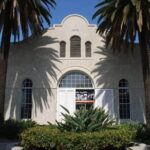
One of the most satisfying stops comes at 332 North Rodeo Drive: the Anderton Court Shops. This matters because it’s the only retail structure designed by Frank Lloyd Wright.
The building is described as a little gem of an unusual sort, with Streamline Moderne and Art Deco spires, a spiral ramp, and a central light well. Even if you do not consider yourself an architecture person, Wright’s work tends to feel intentional, like it’s doing something slightly offbeat on purpose.
What I like about this stop as a visitor: it breaks the “everything looks expensive” spell. Instead of only seeing brand names, you get to see design choices you can actually describe: the ramp shape, the vertical spires, and that central light well concept.
Practical tip: pause and look back at the path you came from. With a spiral ramp, your position changes what you notice.
The Former Beverly Hills Speedway Corner: Racing Before the Glam

The tour then points you to a landmark hotel situated on the northeast corner of the former Beverly Hills Speedway site. It’s hard to imagine it, but a world championship car race took place there in 1926, drawing 70,000 spectators.
This is the history jolt. Rodeo Drive feels like it belongs to movie posters and designer windows. This stop reminds you it also belonged to speed, crowds, and a very different kind of spectacle.
You do not need to be a racing fan for this to land. It simply makes Beverly Hills feel less like a single identity and more like a place that has reinvented itself again and again.
Church of the Good Shepherd: A Mission Revival Finish With Hollywood Pull

Your self-guided tour ends at the Church of the Good Shepherd on North Roxbury Drive, in front of the church. This one is special because the tour frames it as a place where Hollywood royalty comes to pray, confess, and hope for a little divine intervention for the next big movie role.
The facts are solid and grounded: the church is Mission Revival style and was founded in 1923. It’s also described as having seen more famous faces than the Hollywood Walk of Fame, which is obviously playful language, but it signals the vibe and cultural pull.
Why I think this ending works: after the glittery part of Beverly Hills, you get a calmer, more reflective space. It also gives your walk a sense of narrative closure, like you’re not just consuming retail, you’re moving through a whole neighborhood story.
Practical tip: keep your voice low when you’re near the church area. Even if you’re just listening to the audio, you’re stepping into a religious space, not a theme park.
Price and Value: Is $14.99 Worth It?
At $14.99 per person, this is priced like a convenience and storytelling add-on, not a premium guided escort. The real question is whether you’ll use it actively while walking.
Here’s why I think it’s good value for the right person:
- You get lifetime access to the tour in English, both before your booking date and after it. That means you can repeat it later if you come back to LA.
- You use your own pacing, so you can linger at Anderton Court, rush through Rodeo Drive, or stop for photos without feeling behind a group.
- Offline access includes audio, maps, and geodata. That can save you from worrying about mobile data while you’re out on the move.
Where the cost can feel less justified: if you’re not planning to walk much, or if you plan to rely on a single phone for multiple people. The audio is GPS-triggered, so one device shared between several people can turn into a chore.
One more detail: average booking is about 29 days in advance. If you want a specific time window, don’t wait too long to lock it in.
Best Way to Do It: Setup, Headphones, and Per-Person Reality
This is where most frustration can come from, so I’ll be blunt and helpful.
First, bring headphones. They are not included. If you forget, you’ll be stuck either skipping the audio or trying to listen without any privacy in a crowded shopping area.
Second, bring your own smartphone. Again, not included.
Third, plan for one copy per person if you want each person to hear the audio clearly. Because it’s GPS-triggered, you can’t really treat it like a single broadcast everyone shares. In practice, the cleanest setup is headphones on, phone in hand, and everyone listening at their own speed.
If you are traveling as a family, this is the part to clarify early. If you think you can buy one and pass it around, you’ll probably end up frustrated when one person misses the next stop.
Also, download ahead. Offline access helps a lot, but you still want the app ready to go before you start walking.
If you need help, the provider response style you might see tends to be practical. In one interaction, the contact named Helene stressed that the GPS triggers work best when each person has their own tour copy and uses headphones.
Who This Tour Fits Best
This self-guided format is a match when you like structure but hate rigidity.
It’s a great fit for:
- Couples and solo travelers who enjoy walking with a story in your ear
- People who want Beverly Hills and Rodeo Drive context without hiring a driver
- Visitors who are comfortable using a phone while they walk
It might be less ideal if:
- You expect a live human guide walking with you
- You don’t want to use a smartphone outdoors
- You’re traveling with multiple people and only want to buy one device setup
Because the route ends at the Church of the Good Shepherd, it also works well if you like finishing with a quieter landmark rather than looping back to where you started.
Quick Practical Notes So You Enjoy It More
A self-guided tour only works when it fits your attention span. Give yourself permission to pause, especially around Anderton Court and the architectural stops.
Keep your expectations aligned with the format:
- You are in charge of pace.
- The audio is triggered as you move.
- You’ll get more out of it if you listen while walking, not after.
And yes, Rodeo Drive is a busy zone. If you want the best experience, don’t rush it. Treat it like a moving window gallery, and let the audio tell you what to look for.
Should You Book This Beverly Hills and Rodeo Drive Audio Tour?
Book it if you want a walkable Beverly Hills story that explains what you’re seeing, not just where to stand. At $14.99 per person with offline maps and lifetime access, it can be a smart buy if you’re the type who enjoys architecture details, neighborhood context, and a guided route you control.
Skip it or rethink it if you were hoping for a live guide, or if your group plans to share one phone. The GPS-triggered nature means the experience is best when each person can follow their own audio.
If you’re visiting LA and want to cover Beverly Hills and Rodeo Drive efficiently, while still ending in a calmer place at the Church of the Good Shepherd, this one fits the bill nicely.
FAQ
How long is the Beverly Hills and Rodeo Drive self-guided audio tour?
The tour takes about 1 hour 15 minutes to 1 hour 30 minutes.
What does the tour cost?
It costs $14.99 per person.
Where does the tour start and end?
It starts at the Beverly Hills Sign, 1300-1398 Park Way, Beverly Hills, CA 90210, USA, and ends in front of the Church of the Good Shepherd, 504 N Roxbury Dr, Beverly Hills, CA 90210, USA.
What language is available?
The tour is offered in English.
What’s included, and do I need my own headphones?
Included features are the app for Android and iOS, offline access to audio, maps, and geodata, lifetime access to the tour in English before and after your booking date, and directions to the starting point. You need your own smartphone and headphones.
Can I get a full refund if I cancel?
You can cancel for a full refund if you cancel at least 24 hours before the experience’s start time. If you cancel within 24 hours, the amount paid is not refunded.
More Guided Tours in Los Angeles
More Tours in Los Angeles
More Tour Reviews in Los Angeles
Not for you? Here's more nearby things to do in Los Angeles we have reviewed


Beverly Hills & Celebrity Homes Tours, compared.
 ★ 5.0Full-Day Iconic Sights of LA, Hollywood, Beverly Hills, Beaches and MoreFrom $996,147 reviews
 ★ 5.0Hollywood, Beverly Hills & Celebrity Homes Tour by Open Air BusFrom $392,557 reviews
 ★ 5.0Full-Day LA Tour: Santa Monica, Hollywood and Beverly HillsFrom $952,431 reviews
 ★ 4.5Hollywood and Celebrity Homes Bus TourFrom $392,074 reviews
 ★ 4.1Hollywood & Celebrity Homes Open-Air Bus TourFrom $291,624 reviews
 ★ 4.5Celebrity Homes and Hollywood Open-Air Bus TourFrom $371,546 reviews
 ★ 4.9Hollywood & Beverly Hills Celebrity Helicopter TourFrom $199835 reviews
 ★ 5.0Guided Hollywood Celebrity Homes and Lifestyle TourFrom $39698 reviews
Browse the lists this tour appears in