Downtown Los Angeles History and Architecture Walking Tour

Reviewed · LOS ANGELES CITY TOURS

Downtown Los Angeles History and Architecture Walking Tour

5.0 · 93 reviews 2 hours 30 minutes (approx.) From $35 Bookable on Viator
Book on Viator →

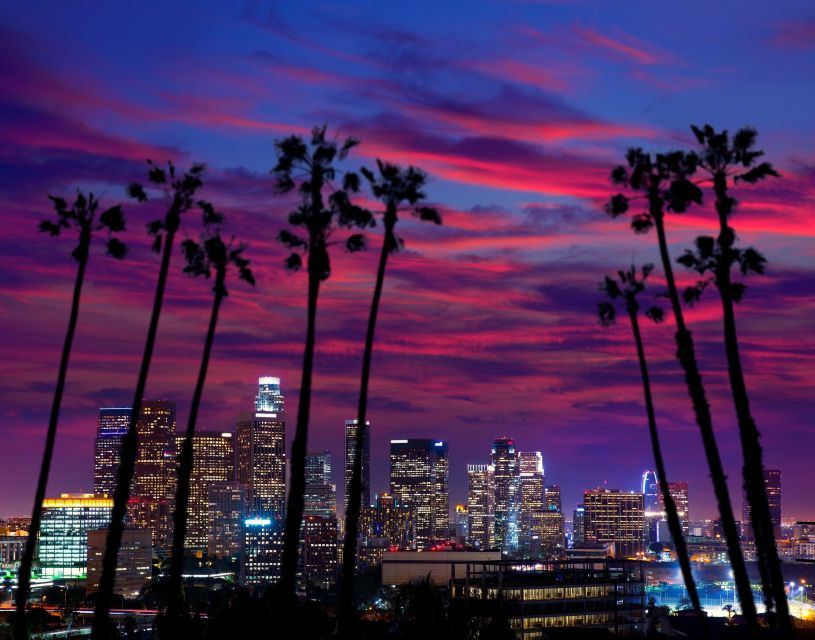
DTLA gets real when you walk it. This small-group history and architecture walk threads design, film-era movie palaces, and changing public spaces into a single, practical route in central Los Angeles. You’ll move from food hall energy at Grand Central Market to iconic downtown buildings built for another era, then reused for today’s LA.

I love the story-driven architecture style, where design choices connect to how the city grew and how movies helped sell it to the world. I also like the small group size (up to 15 people), which makes it easy to ask questions instead of just standing in a crowd.

One tradeoff: it’s a walking tour with limited breaks, and a couple of comments note it can be hard to hear the guide at busy corners. If you want a strict, textbook-style architecture lecture, you may feel the tour spends more time on film history and city change than on technical building details.

Key points before you go

Downtown Los Angeles History and Architecture Walking Tour - Key points before you go

  • You get an urban-story angle, linking architecture to film history and how downtown keeps changing.
  • Small-group format (max 15) helps you keep up and ask questions.
  • Multiple landmark interiors are part of the experience, not just quick street photos.
  • Most stops are quick (often around 10 minutes, with one longer theater stop), so you cover a lot in 2.5 hours.
  • Downtown is loud, so plan for a brisk pace and occasional hearing challenges on louder streets.

Grand Central Market: where Downtown LA starts tasting like the world

Downtown Los Angeles History and Architecture Walking Tour - Grand Central Market: where Downtown LA starts tasting like the world
The tour kicks off at Grand Central Market, a food hall that opened in 1917. It’s a great first stop because it tells you something important about LA right away: downtown has always been where different cultures run into each other.

You’ll skim the surface of that story through flavors, with examples like Mexican tacos, Japanese ramen, Salvadoran pupusas, and Jewish pastrami. The point is not to do a food crawl. It’s to start with the idea of LA as a city built from layers of migration, business, and reinvention, then keep moving on foot from there.

You can also read our reviews of more historical tours in Los Angeles

Angels Flight and Pershing Square: compact rides and public-space questions

Downtown Los Angeles History and Architecture Walking Tour - Angels Flight and Pershing Square: compact rides and public-space questions
Next comes Angels Flight, the funicular that’s often described as the world’s shortest railway. Built in 1901, it served the Bunker Hill community like a practical shortcut, not a museum ride.

It helps to think of it like a reminder of how downtown used to function at a human scale. You feel the line between old LA and the bigger, faster city that grew around it, without needing a long detour. If you like transit history or small engineering details, this stop lands well.

Then you’ll hit Pershing Square, once a central civic gathering point and now a place that raises modern questions about public space. The discussion is less about the statue and more about how cities handle shared areas, who benefits, and what happens as downtown gets more commercial.

Bunker Hill steps and the Historic Theater District’s movie-palace story

Downtown Los Angeles History and Architecture Walking Tour - Bunker Hill steps and the Historic Theater District’s movie-palace story
From Pershing Square, the walk carries you toward the symbolic steps tied to Bunker Hill’s transformation. This part matters because it shows how one neighborhood can change roles over time, from residential wealth to a zone that became cultural and financial.

The tour treats the stairs and the surrounding blocks as an architectural metaphor. LA’s climb to global prominence did not happen by accident. It happened through investment, design choices, and the constant push-pull between what people wanted and what downtown could provide.

After that, you enter Broadway’s Historic Theater District, home to a concentrated run of movie palaces. The big idea here is how the early Hollywood screen became a full-stage production. These were not plain theaters. They were designed to be a destination, a place where architecture helped sell the dream.

Bradbury Building: ironwork, light, and why it keeps getting filmed

Downtown Los Angeles History and Architecture Walking Tour - Bradbury Building: ironwork, light, and why it keeps getting filmed
The Bradbury Building is one of those downtown interiors that feels like it’s still holding its breath. You’ll see the open atrium, the wrought-iron staircases, and the way light moves through the space.

This is also where film history becomes physical. The building has served as a backdrop for movies including Blade Runner, and it has inspired architecture far beyond LA. Even if you’re not obsessed with design, you’ll probably notice how the building’s form turns movement into a kind of theater, like the architecture is performing.

The tour uses this stop to connect imagination to engineering. It’s a reminder that good architecture is often about flow, not just decoration.

Old Bank District and the Continental Building: Beaux-Arts ambition in motion

Downtown Los Angeles History and Architecture Walking Tour - Old Bank District and the Continental Building: Beaux-Arts ambition in motion
Then you shift into the financial heartbeat of old downtown. Spring Street’s Old Bank District is nicknamed the Wall Street of the West, and the tone matches: Beaux-Arts buildings with a sense of power and permanence.

The Continental Building, completed in 1904, gives the story an early skyscraper angle. You get a sense of how downtown became a business machine before it became a film machine, and how those two identities kept feeding each other.

This is a good section if you like reading cities like documents. The buildings look elegant, but the tour’s emphasis is on why they were built that way, and how that choice shaped what downtown became later.

Here's some more things to do in Los Angeles

El Dorado Lofts: Art Deco and Nouveau style after a luxury-hotel life

Downtown Los Angeles History and Architecture Walking Tour - El Dorado Lofts: Art Deco and Nouveau style after a luxury-hotel life
Next up is the El Dorado Lofts, a striking building that reflects Art Deco and Art Nouveau influences. Originally built as a luxury hotel in 1913, it catered to wealthy clientele drawn to the growing financial district.

What I like about this stop is how it bridges global style trends with local LA history. You’ll see how the building’s ornate terra cotta exterior fits the broader Art Deco movement, then you also get the local twist as it shifted from hotel to today’s loft life.

This is one of the tour’s recurring themes: downtown buildings often survive by changing jobs. The exterior stays, the purpose evolves, and the city keeps its continuity even while it updates its identity.

The Last Bookstore, Arcade Building, and Clifton’s: when downtown sells nostalgia

Downtown Los Angeles History and Architecture Walking Tour - The Last Bookstore, Arcade Building, and Clifton’s: when downtown sells nostalgia
The Last Bookstore is a quick-but-memorable interior stop. Opened in 2005, it’s known for a book tunnel and floor-to-ceiling shelves. It also holds rare books, vinyl records, and local art.

This isn’t just a photo stop. The tour frames it as part of downtown’s creative pivot, where old industrial energy and new cultural hobbies start living side by side.

After that, you’ll step into the Arcade Building, completed in 1924. The key detail here is that it was tied to LA’s early radio industry, with studios and offices once using this space. Today it’s a mix of eateries and boutiques, but the tour points out how you can still read the original purpose into the building’s role as a downtown connector.

Then comes Clifton’s, which has a real historical backbone. The original Clifton’s Cafeteria opened in 1931 and became known for offering free meals to anyone in need during the Great Depression. The modern version keeps that spirit while adding themed decor, including enchanted forest styling and hidden tiki-bar surprises.

This stop works because it’s not just “cute.” It’s a reminder that downtown survival has always depended on a mix of business and community care.

Los Angeles Theatre and the Tower Theatre: from premieres to talkies to Apple

Downtown Los Angeles History and Architecture Walking Tour - Los Angeles Theatre and the Tower Theatre: from premieres to talkies to Apple
The Los Angeles Theatre is one of the most ornate stops on the walk. Built in 1931 for the premiere of Charlie Chaplin’s City Lights, it’s designed with the same kind of grandeur you’d expect from major European opera houses. You’ll see the idea of cinema as event, not just entertainment.

One of the smartest pieces of the tour here is the comparison between old-world stage spectacle and LA movie palaces. The building shows you how film became a global language, with architecture helping package the story for the masses.

Then you’ll continue to the Tower Theatre, built in 1927 as the first Los Angeles theater designed for talkies. The debut film tied to that shift is The Jazz Singer, and the tour uses the story to explain why synchronized sound changed the whole movie-going experience.

Design fans will notice the Spanish Renaissance Revival style, with details like stained glass and carved ornament inside. The tour also connects the venue to pop culture, including the Silencio scene in David Lynch’s Mulholland Drive, which adds a dreamlike layer to the architecture story.

Finally, the Tower Theatre is now an Apple flagship. That’s adaptive reuse in real life: a historic space updated for modern use while still keeping enough of the original character to matter.

Jewelry District and Fashion District: where craft, trade, and style intersect

Downtown’s Jewelry District gets its own section, covering about 12 blocks and described as the largest jewelry district in the United States. The roots go back to the 1920s, and the tour treats it as more than storefront sparkle.

You’ll hear how it functions as a hub of craftsmanship and entrepreneurship, tied into the global jewelry trade. If you’ve ever liked the idea of trade networks behind the scenes, this stop gives you that bigger picture.

Then the walk continues into the Fashion District. This is LA’s design working engine, less flashy than some fashion capitals, but deeply connected to textiles and trend-making. The tour’s angle is about creativity as a business model, not just runway glamour.

If you like cities where commerce and art sit in the same buildings, this is a key payoff stretch.

Eastern Columbia Lofts to Hotel Per La: finishing with two eras in one block

The Eastern Columbia Lofts are instantly recognizable for the turquoise terracotta tile and the clock tower. Built in 1930, they reflect Art Deco optimism, and the tour often compares them to icons like New York’s Chrysler Building.

There’s also an entertainment layer connected to famous residents mentioned in the tour narrative, including Johnny Depp. That adds an LA celebrity-weather map feeling, where famous people and famous buildings become part of the same story.

The walk ends at Hotel Per La, an Autograph Collection property that was formerly the Bank of Italy building. The tour’s takeaway is that the bank building symbolized Italian immigrant aspirations and success, and later the Bank of Italy evolved into Bank of America, making this a West Coast headquarters story.

Today, the space works as a boutique hotel. You’ll hear about the restored gold ceiling and towering marble columns, plus rooftop pool views and art-filled interiors. It’s a strong closing note because you see how downtown’s financial power turned into modern hospitality without completely losing its character.

Price and what you truly get for $35

At $35 per person for about 2 hours 30 minutes, the value comes from the density. You’re not spending the afternoon bouncing between far-flung sites. You’re moving on foot through central downtown and hitting multiple types of architecture in one sweep: early skyscraper ambition, movie-palace spectacle, and reuse stories where buildings changed jobs.

The tour includes a local guide, and it uses a mobile ticket. Many of the stops are marked as free-entry on the tour plan, so you’re not stacking ticket costs on top of the price.

The small-group cap of 15 people also matters. You get more back-and-forth, and the tour format supports questions. That said, your best fit depends on what you want. If you love film history, you’ll feel at home. If you want an engineering-style catalog of architectural names and dates, you may find the narrative more interpretive than technical.

Parking fees are not included, so if you drive you may want to plan for that extra cost. The start point is at the Grand Central Market parking garage, and the end point is one block from the Metro Station 7th Street / Metro Center, so car-free access is possible.

Who should book this DTLA walk, and who might skip it?

This tour is a strong match for you if you like architecture as a story tool. You’ll probably enjoy the way the walk links form to function, and both to film history and neighborhood change. It also fits anyone who likes being able to ask questions, because the group stays small.

It also works well for design-minded people, urban planning types, and film fans, since the route connects those worlds instead of treating them as separate hobbies. One more plus is that the tour tends to include interior-focused stops, so you see more than just street facades.

I’d consider skipping if you’re sensitive to noise and hearing difficulty. Downtown corners can be loud, and a few comments have pointed out that it’s hard to hear the guide sometimes. I’d also temper expectations if you were hoping for deep technical architecture lectures, because the tour emphasis is on space, design choices, and how they shaped LA’s film story and city transformation.

Should you book this Downtown Los Angeles History and Architecture Walk?

If you want an efficient, human-scale way to understand DTLA, this is an easy yes. For $35, you get a focused route that mixes major landmarks with reused spaces, plus the film-history thread that makes LA feel like a world of its own.

Book it if you can handle a long walking stretch and you’re ready for story-driven architecture, not a classroom lecture. Try it on a day with good weather, since the tour requires it. If that sounds like your kind of afternoon, lace up, head to Grand Central Market, and let downtown explain itself one building at a time.

FAQ

How long is the tour?

It runs about 2 hours 30 minutes.

How much does the tour cost?

The price is $35.00 per person.

Is this a small group?

Yes. The tour has a maximum of 15 travelers.

What language is the tour offered in?

It is offered in English.

Where do I meet, and where does it end?

The start is Grand Central Market Parking Garage, 308 S Hill St, Los Angeles, CA 90013. The end is Hotel Per La, Autograph Collection, 649 S Olive St, Los Angeles, CA 90014, one block away from Metro Station 7th Street / Metro Center.

Do I need to pay for parking?

Parking fees are not included.

Are service animals allowed?

Yes, service animals are allowed.

Can I cancel for a full refund?

You can cancel up to 24 hours in advance for a full refund. If you cancel less than 24 hours before the experience starts, the amount you paid will not be refunded.