
Reviewed · LOS ANGELES NIGHT, GHOST & TRUE CRIME TOURS
O.J. Simpson & Menendez Brothers True Crime Driving Tour of L.A.
West LA has a way of turning ordinary streets into evidence. This 3-hour O.J. Simpson and Menendez Brothers true-crime driving tour takes you from Hollywood industry memorials to the places tied to the infamous chase.
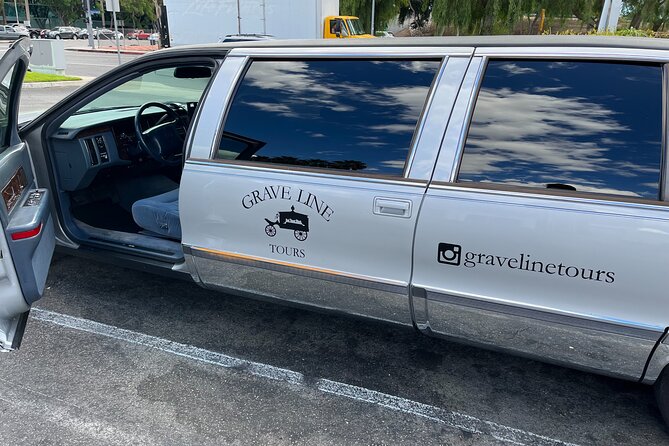
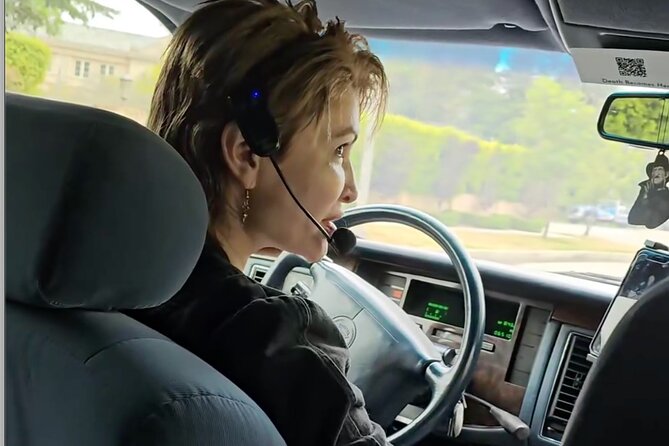
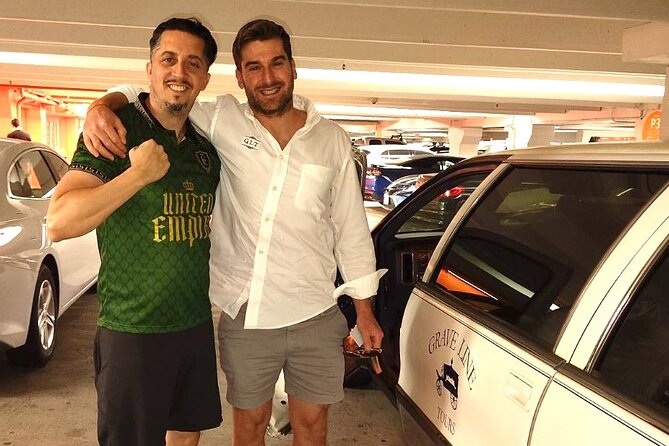
What I like most is the balance of storytelling and logistics, done in a comfy old limo for most of the ride, plus a short break. I also really value that the guide, Blaze, keeps the tone factual and respectful while still making it feel human, with room for discussion and even light banter.
One thing to think about first, if you are easily upset: this tour covers extreme subject matter and is not recommended if you get emotionally rattled by violent crimes and intense media-case details.
Key highlights you should know
- Blaze guides the whole ride with clear facts, clips, and lots of context
- Old-limo comfort, rain or shine with a short mid-tour break
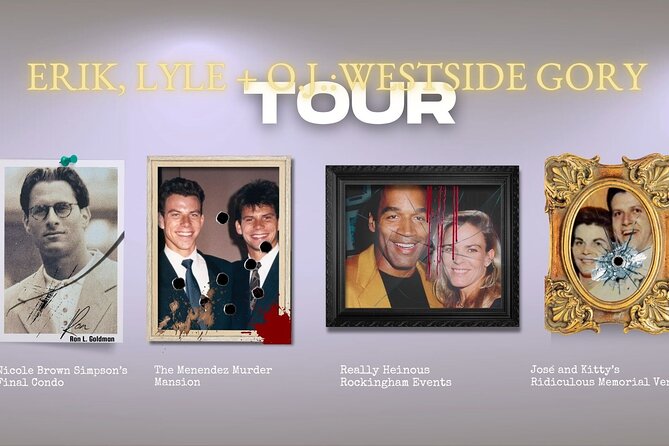
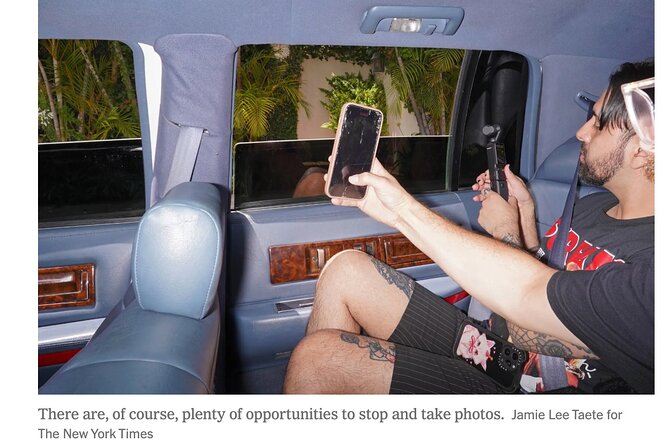
- Smartphone visuals add background as you pass each site
- West LA contrast from Beverly Hills luxury to West Hollywood queer community during the AIDS crisis
- You see the full timeline from memorials and therapy sessions to Brentwood and the freeway chase
Setting Off From Ovation Hollywood, Then Into West LA
Most people start this tour at Ovation Hollywood (6801 Hollywood Blvd) around 10:30 am, and you finish back at the same place. That loop matters, because you do not lose your day to detours or complicated logistics.
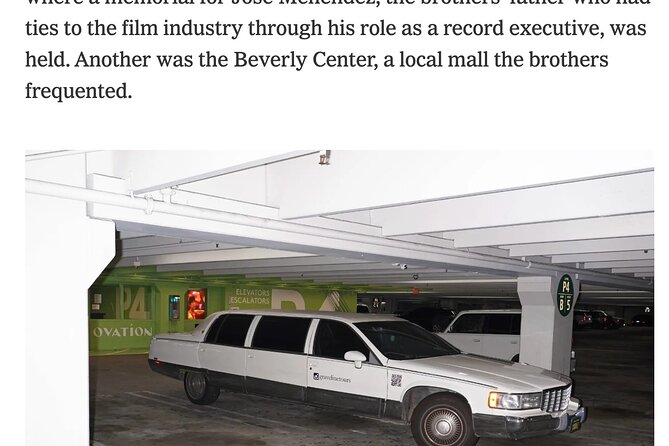
The vehicle is a key part of the experience. You are in an older limo for the driving, which makes the whole thing easier than hopping in and out of a car all day. The guide can focus on the story, while you stay seated and follow along, and there is usually a short break midway to reset.
A practical plus: the tour uses mobile tickets and includes visual background materials you can view on your smartphone. If you like “putting faces to facts,” this helps you keep track of names, timelines, and why a particular intersection or address suddenly became famous.
You can also read our reviews of more tours and experiences in Los Angeles.
Why This Tour Feels Different: Facts, Tone, and a Real Guide (Blaze)
The biggest reason this tour gets high marks is not just the list of locations. It is the way the story is handled.
Blaze is repeatedly praised for doing a lot at once: driving, narrating, and playing media clips when they fit the moment. More importantly, the tone stays focused on the victims and the human stakes, not on turning tragedy into spectacle. That respect is a big deal on a subject like this.
Another detail I think you will appreciate is how the tour connects the two headline stories. On paper, O.J. Simpson and the Menendez Brothers can feel like two separate eras of Los Angeles crime news. Here, you get the links through entertainment world connections, money and marketing, and the way both cases became tangled with celebrity culture.
Hollywood Memorials at the Directors Guild of America
One of the first stops hits the Directors Guild of America theater on Sunset Boulevard, tied to the memorial service for José and Kitty Menendez. This is not just a building you pass. The story around it is about Los Angeles mourning and processing an attack that landed right in the middle of Hollywood’s visible, elite circles.
What I like about this kind of start is that it reframes the case early. You are not only chasing crime-scene fame. You are seeing how the city itself reacted in real time, in a venue used for premieres and industry ceremony.
A consideration: this stop is tied to tragedy and grief, so the emotional tone can be heavier right away. If you are sensitive, plan for it like you would a museum exhibit that deals with hard history.
The Menendez Connection to O.J.: Hertz and Sports Marketing
Next comes a fascinating corporate contrast: a Hertz Rent a Car location where José Menendez signed NFL superstar O.J. Simpson to a groundbreaking national spokesperson and TV commercial deal.
This is one of the most useful stops for understanding why these cases became “everyone’s business.” Los Angeles did not just watch. It promoted, packaged, and marketed the people at the center of the story. You also get a clear sense that celebrity power was not a side detail. It was part of how the public identity formed.
If you are the type who likes true crime that goes beyond the headline moment, this stop does that well. It explains a key social mechanism: how fame and money were sold long before courtroom drama made the names permanent.
Beverly Hills Wealth as a Crime-Screen: Beverly Center and Rodeo Drive
Then the tour leans hard into the visual language of money.
At the Beverly Center, you revisit a major luxury shopping hub on the edge of Beverly Hills and West Hollywood, where celebrities and wealthy Angelenos spent time in the 1980s and 1990s. After the murders, Erik and Lyle Menendez were spotted here on flashy shopping sprees, and in court, those purchases were used to argue greed and excess.
That connection between shopping and prosecution is one reason this tour works for curious minds. Places that look like simple consumer culture can turn into evidence in the legal story.
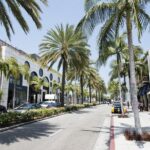
From there, you get the even more dramatic symbolism of Rodeo Drive. This is the palmlined luxury strip that visually signals status. The tour ties Rodeo Drive to Nicole and O.J. Simpson and to José, Kitty, Lyle, and Erik Menendez strolling and browsing during the late 1980s and early 1990s. It is a reminder that the cases were unfolding inside the same shiny ecosystem that made Los Angeles feel glamorous on the surface.
Nightlife and Control: Tryst, Daisy, and the Violence Before the Verdict
Two nightlife-linked stops add a darker edge.
At the former Tryst nightclub at 401 N. La Cienega Boulevard, the story centers on an intimate lounge scene in the early 1990s, where O.J. Simpson reportedly confronted and terrorized Nicole Brown Simpson and her date, Keith Zlomsowitz. It is presented as a chilling preview of the stalking and control that became part of Nicole’s tragic arc.
Then you shift to the former Daisy nightclub at 326 N. Rodeo Drive in Beverly Hills. The tour places Nicole Brown Simpson working there in 1977 at age 18, when she met O.J. during a visit. It is one of those “how it all starts” anchors that helps you understand why their relationship became so publicly intense.
There is no way to make these stops pleasant, but you can still make them meaningful. The tour’s approach helps you see how social scenes, power dynamics, and public perception ran together.
West Hollywood: Where Grief and Activism Were Right Next Door
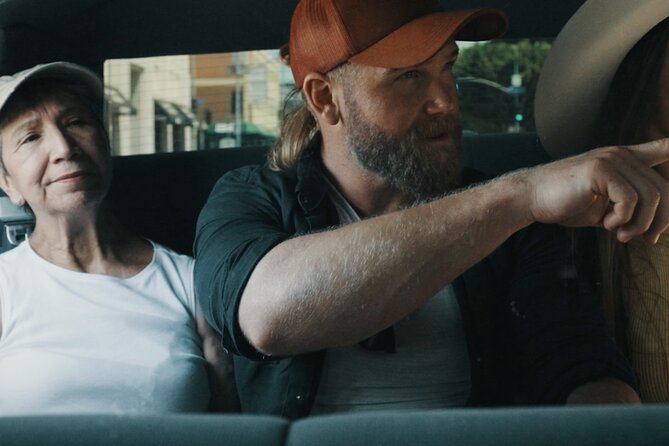
Here is one of the smartest elements of the tour: it does not keep you only in the story of privilege and fame.
West Hollywood becomes a stop tied to the LGBTQIA+ community during the AIDS crisis. The tour frames the area as both a grief epicenter and a headquarters for activism and awareness. That matters because the Simpson and Menendez stories unfolded under a more mainstream, heteronormative Los Angeles lens, shaped by traditional family image and media attention.
The tour also includes a longtime West Hollywood gay club that survived since the 1980s and 1990s. It is described as a sanctuary and battleground during intense homophobia, where queer Angelenos built chosen families and grieved loved ones lost to AIDS.
If you are looking for something beyond crime-site spotting, this part gives perspective. It reminds you the city was changing in multiple ways at the same time, and people were living through fear and loss with different levels of visibility.
Therapy, Evidence, and the Dr. Jerome Oziel Stops
A turning point on the tour is the cluster of locations tied to Dr. Jerome Oziel.
You visit his sleek Beverly Hills office at 435 North Bedford Drive, presented as a central setting where pivotal therapy sessions with Erik and Lyle Menendez took place. The tour also describes Oziel as becoming a key witness for the prosecution, including recorded incriminating conversations.
Later, you stop at a small park off Santa Monica Boulevard in Beverly Hills, where Erik is said to have talked with Dr. Oziel and then admitted, We did it. We killed our parents. The park becomes a confession site in this true-crime narrative, tied to a moment that reframed how the story was understood.
A practical consideration here: these stops are not just locations. They are moments in the emotional logic of the case, so the tour does not skim. It slows down enough to let you absorb why a therapy session and a walk-and-talk bench moment could matter as much as any address.
The Menendez Family Home at 722 North Elm Drive
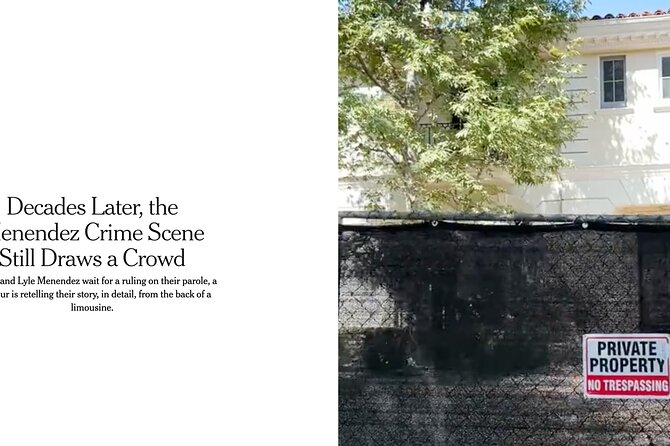
The stop at the Menendez mansion, 722 North Elm Drive, is where the tour becomes unavoidably real. The story is that brothers Lyle and Erik Menendez fatally shot José and Kitty in the home’s TV room on August 20, 1989.
Today, the Mediterranean-style 1927 villa still stands behind its gates, and it is described as a magnet for true crime fans, partly because the façade became a symbol tied to greed, family trauma, and one of Los Angeles’ most talked-about murder cases.
If you choose this tour, come with the understanding that you are not going to get a “souvenir” version of tragedy. You are getting a guided look at a real address that sits inside an ongoing public conversation.
Erik’s UCLA Dream, and the System of Control
Another sobering step is connected to Erik Menendez’s UCLA acceptance. The tour portrays this as a dream of independence, but says José forced him to commute from home and forbade him from living in the dorms.
This is one of those details that may feel “biographical” at first, but it actually ties back to a big theme: control. It explains why normal milestones were not normal inside this family story.
If you like causation over shock value, you will likely appreciate this stop. It helps connect upbringing and pressure to later behavior in a way that is still tied to what the tour provides.
O.J. and Nicole’s Brentwood World: Sunset Church to Everyday Corridors
As the tour heads into Brentwood, it shifts from flash to daily life.
Nicole Brown Simpson’s funeral at St. Martin of Tours Catholic Church on Sunset Boulevard is one of the most visually striking places, described as a Spanish-style church with about 200 friends, family, and celebrities under heavy media scrutiny. O.J. attended with their children, and the tour frames it as part of the beginning of the Trial of the Century era.
Then you visit the former site of O.J. Simpson’s Rockingham estate at 360 North Rockingham Avenue. The original home was demolished and replaced, but the address remains a magnet because it is tied to where Simpson lived, hid from police, and ultimately surrendered.
You also stop at Nicole’s rented Brentwood home on Gretna Green Way, framed as her refuge during separation and the backdrop for a chilling 911 call where she begged police for help as O.J. raged outside.
Next is San Vicente Boulevard in Brentwood, described as an everyday corridor: his office, go-to gyms, favorite restaurant Mezzaluna where Nicole shared her last meal with family, and a run of upscale cafes, banks, and boutiques that shaped routine. The tour makes the point that date nights and errands were part of the same streets as the tragedy that followed.
The Brentwood Case Micro-Stops: Starbucks, Mezzaluna, Ben & Jerry’s, and Bundy Drive
This tour also has the kind of small stops that make it feel detailed instead of just drive-by.
You get a coffee break at the Brentwood Starbucks, where Nicole Brown Simpson and Ron Goldman reportedly first met in line. The stop is presented as about 20 minutes, and the admission is free for coffee and stretch time.
Then you visit the former Mezzaluna Trattoria spot on San Vicente Boulevard in Brentwood. The tour says Nicole shared her final dinner with family there on June 12, 1994, before returning home to Bundy Drive.
Another small but heavy stop is the former Ben & Jerry’s ice cream shop in Brentwood, where Sidney and Justin Simpson enjoyed ice cream with family the evening Nicole and Ron were murdered. The storefront is gone, replaced by new businesses, but the location still lands emotionally because it marks something ordinary on the night before everything changed.
Finally, you reach the key residential stop at 875 South Bundy Drive, described as Nicole Brown Simpson’s Brentwood condominium courtyard complex. Her bodies were found just inside the front gate and on the small front walkway. The tour frames it as a lasting symbol of domestic violence and media frenzy, tied to the case that reshaped Los Angeles and captured national attention.
The Alleged Escape Route and the Low-Speed Chase Down the 405
Near the end, the tour reaches the last-phase timeline.
You pass a West Los Angeles intersection where witnesses later reported seeing O.J. driving his white Ford Bronco recklessly shortly after the murders, suggesting movement during the alleged escape window. It is a “timeline” stop, so you are meant to think in sequence, not just absorb geography.
Then you get the famous pursuit framed as a low-speed chase along Los Angeles freeways, with Simpson riding in the white Ford Bronco leading police cars and news helicopters down the 405 while millions watched live on television. The pursuit ends when the Bronco returns to Simpson’s Brentwood estate and he surrenders in his driveway.
This is the moment where the driving style and the storytelling style match the subject. You are not looking at a static plaque. You are experiencing the same type of route framing that made the chase so unforgettable on TV.
Price, Value, and Who This Tour Fits Best
At $93.08 per person for about 3 hours, this is priced like a niche experience that prioritizes storytelling and comfort over constant walking. You also get smartphone visuals and the focus on a tight geographic theme: West Los Angeles.
For value, consider what you are buying:
- A guide who runs the story, including clips at the right moments (Blaze is a recurring standout in the feedback)
- A small group size, capped at 8 travelers, so the tour stays manageable
- A route that covers two massive cases while tying them together with Los Angeles-specific links
Who should book? This works best if you like true crime that is more than just the verdict. If you enjoy how celebrity culture, marketing, and neighborhood context intersect with tragedy, you will likely feel satisfied.
If you are sensitive to extreme subject matter or you know you get emotionally upset by violent crime details, this one is probably not for you.
Should you book the O.J. Simpson & Menendez Brothers Driving Tour of L.A.?
If you want a well-paced, guide-led true-crime experience that uses West LA addresses to tell a bigger story, this is a strong pick. The ride comfort, the small group size, and Blaze’s storytelling approach are the reasons it feels worth the price.
Book it if: you want context, clips, and connections between the two cases. Skip it if: you do not want to hear or see emotionally heavy crime material.
FAQ
How long is the O.J. Simpson & Menendez Brothers True Crime Driving Tour of L.A.?
It runs for about 3 hours.
What is the price per person?
The price is $93.08 per person.
Where do I meet the tour, and where does it end?
You meet at Ovation Hollywood, 6801 Hollywood Blvd, Hollywood, CA 90028, and it ends back at the meeting point.
What time does the tour start?
The listed start time is 10:30 am.
Is the tour offered in English?
Yes, it is offered in English.
What do I get with the tour related to my phone?
You get access to visual background materials you can view using your smartphone, and the tour uses a mobile ticket.
Are snacks included?
No snacks are included, but there is an opportunity to purchase coffee and light snacks halfway through the tour.
What is the group size?
The tour has a maximum of 8 travelers.
Is this tour recommended if I am sensitive to disturbing content?
No. It is not recommended for travelers sensitive to extreme subject matter or emotionally upset by disturbing content.
More Tours in Los Angeles
More Tour Reviews in Los Angeles
Not for you? Here's more nearby things to do in Los Angeles we have reviewed


Los Angeles Night, Ghost & True Crime Tours, compared.
 ★ 4.2Hollywood Night Tour with Griffith ObservatoryFrom $49531 reviews
 ★ 5.0Haunted Hollywood Walking Tour: True Crime and Creepy TalesFrom $39299 reviews
 ★ 5.0Hollywood Ghost Hunting Experience with Real Paranormal ToolsFrom $55267 reviews
 ★ 4.5Los Angeles Ghost Tours: Terrors of TinseltownFrom $32170 reviews
 ★ 4.5Haunted Catalina Walking Ghost TourFrom $40139 reviews
 ★ 5.0Hollywood Medieval Torture Museum Ticket with Ghost HuntingFrom $31133 reviews
 ★ 4.4The Queen Mary: Admission, Tours, and Paranormal ExperienceFrom $45123 reviews
 ★ 4.2Universal Studios Hollywood: Halloween Horror NightsFrom $7798 reviews
Browse the lists this tour appears in