
Reviewed · LOS ANGELES CITY TOURS
Los Angeles Chinatown and Little Tokyo Walking Tour
Two neighborhoods. One smart plan. I like how the local guide connects everyday streets to immigration history, and I like the focused route that hits key Chinatown and Little Tokyo landmarks. The one thing to plan for is the short Metro ride, since rail fare is not included.
I especially like that this is built for real-time learning. You pause at places you can actually photograph, then move on to the next block with context. Expect good weather, solid walking, and a tour that wraps near the Japanese American Cultural and Community Center so you can hop back on the train.
Key things I’d watch for
- A guide-led route that explains what you are seeing, not just where it is
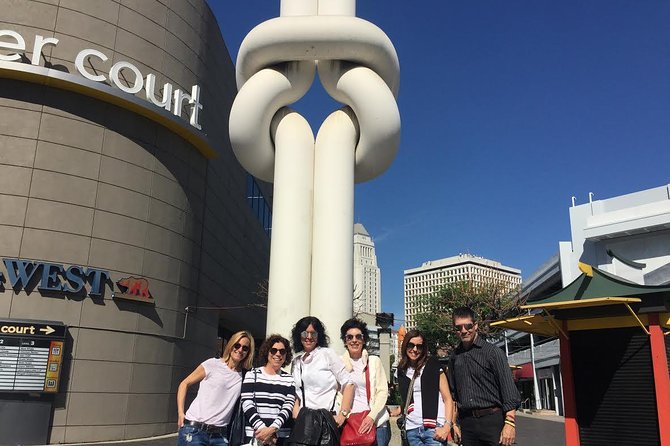
- Chinatown landmarks up close including the Celestial Dragon plaza area and the East and West Gate
- Little Tokyo stops with purpose like Japanese Village Plaza and the Japanese American Cultural and Community Center
- A quick Metro hop between neighborhoods, with help getting through rail on the day
- Small group size up to 20 people, so questions do not get lost
- No big admission fees at the stops, so your money stays focused on the experience
Chinatown to Little Tokyo in 2 hours: the flow that makes it work
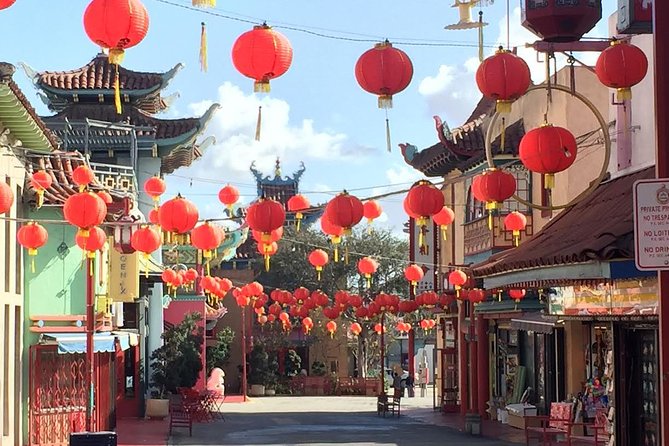
This is a two-neighborhood walk that keeps you from doing the math on your own. You start in Chinatown, work your way through a handful of major stops, then take a short Metro rail ride to Little Tokyo. The total time is about two hours, which is long enough to learn, short enough to stay energetic.
What makes it a good format for first-timers is the rhythm. You do not just drift through streets. You stop at recognizable places and get the “why this matters” piece before you walk to the next one. That is how the neighborhood layers actually click, because you can connect present-day storefronts to immigrant roots and community life.
The tour is priced at $38 per person. That is not a deal-breaker kind of cost, but it feels fair because you are paying for a local guide and a structured route that includes the Chinatown to Little Tokyo transition. The main additional cost you should expect is the Metro rail fare, which is not included.
Starting at 943 N Broadway, then stepping into Chinatown’s landmark streets
The tour begins at 943 N Broadway, right in the heart of Chinatown. This is a practical starting point because the area is already set up for pedestrians and public transit. You get going at 10:30 am, and the first stretch is designed to orient you fast.
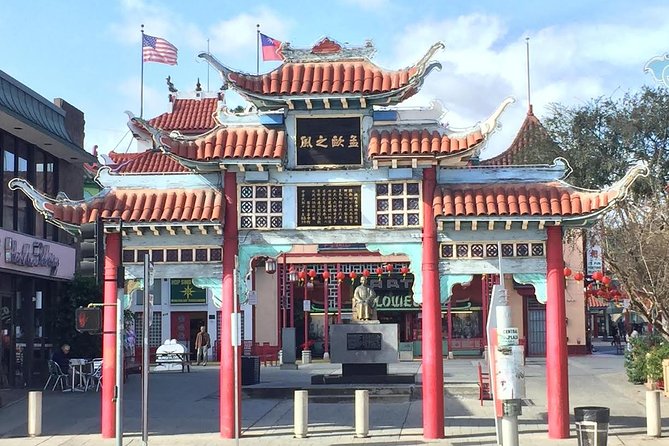
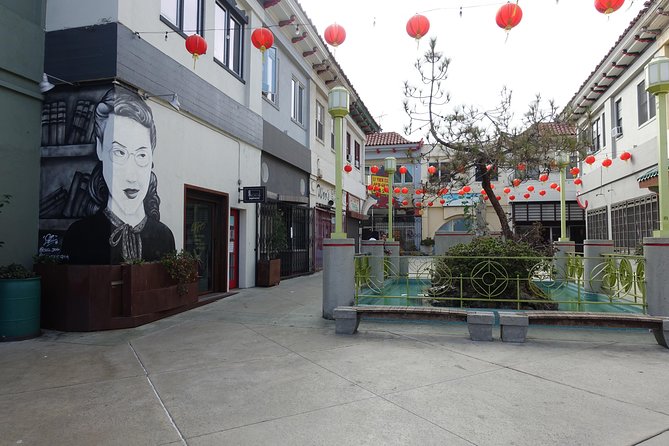
Stop one is Chinatown Plaza, with additional focus around the Chinatown Celestial Dragon area, plus recognizable street-level stops tied to daily life. Your route also includes landmarks like Hop Louie restaurant, Wonder Bakery, and the East and West Gate. These are the kinds of places that help you understand Chinatown not as a postcard, but as a working neighborhood with a rhythm.
There are also stops that add texture beyond standard plaques. You will see a movie location site and artwork by Tyrus Wong. Those detours matter because they show how Chinatown appears in broader Los Angeles culture, not just in local conversations. It is a good reminder that communities are shaped by both residents and how the city tells their story.
A small heads-up: because this first portion is in the busiest part of Chinatown, arrive with comfortable shoes and be ready to pause often. The tour moves, but it is not a speed-walk.
You can also read our reviews of more tours and experiences in Los Angeles.

Blossom Plaza and the Italian past you can spot in the middle of it all
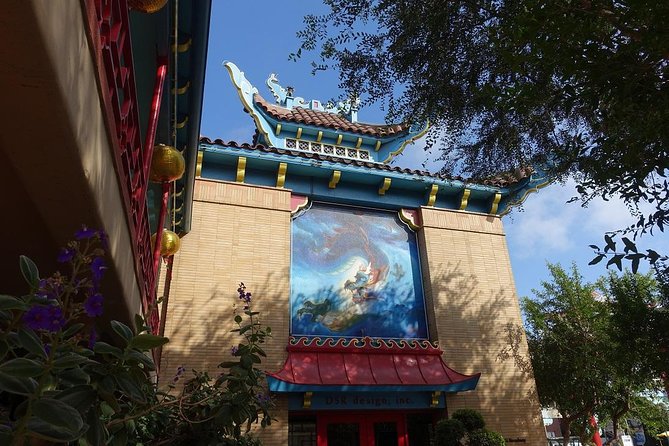
After Chinatown, you head to Blossom Plaza. This stop is short, but it carries weight because it ties you to LA’s older immigrant waves in an unexpected way. Blossom Plaza is noted as home to LA’s old Little Italy and Italian history.
If you only know the big modern identities of the city, this is a helpful reality check. Neighborhoods overlap. Streets keep changing the communities they serve, even if the physical setting feels permanent. Seeing Blossom Plaza as part of a Chinatown to Little Tokyo route helps you understand how immigrant Los Angeles is not a set of isolated boxes. It is closer to a layered timeline.
This stop also works as a mental reset. Chinatown is energy and density. Blossom Plaza gives you a breath before you shift toward Japanese American community sites in Little Tokyo.
The Metro Rail segment: the one ride that changes the whole tour
To get from Chinatown to Little Tokyo, you take Metro rail. The tour includes the ride, but rail fare is not included in the $38 price. The guide can help you figure out how to acquire the fare on the day, which is a nice support if you have not used Metro before.
This matters because the Metro ride is not just transportation. It is part of the teaching. During this short segment, the guide explains history of Little Tokyo and Japanese Americans, and it also covers religions of the Japanese people. Even with the ride being brief, this is one of the most efficient ways to keep the learning going without adding extra walking time.
You should plan to use this ride for a quick reset and to stay attentive. It is tempting to treat it like dead time, but that is exactly when the tour adds context. Also, it helps to know that the tour ends back at the Japanese American Cultural and Community Center, then you can take another two stop Metro ride back to the starting area.
Japanese Village Plaza: where Little Tokyo feels like a center, not a stop
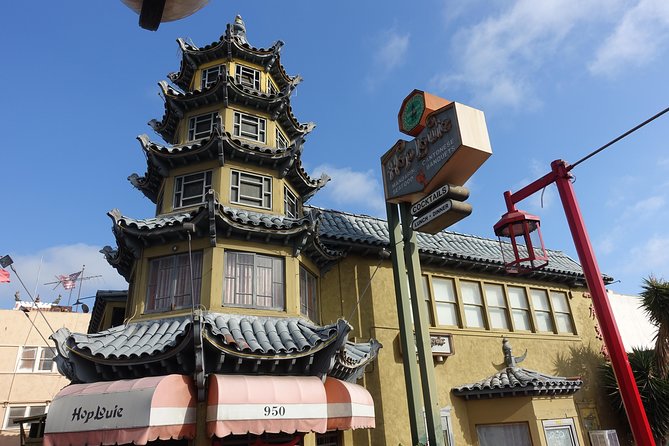
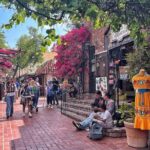
Japanese Village Plaza is the main Little Tokyo anchor on this route. It is the kind of place that makes sense once you have seen Chinatown first, because you notice the similarities and differences right away. You are looking at a neighborhood shaped by Japanese American community life, and the plaza setting gives you an easy reference point for the stories you hear.
The stop here lasts about 15 minutes, which is enough time to slow down, look around, and understand why this area became a hub for residents and visitors. You are not just touring buildings, you are learning how public space supports community identity. A plaza is where people gather, where businesses cluster, and where cultural life becomes visible.
One practical tip: if you are visiting during a busy time of day, you may feel the pull to rush for photos. Resist that urge. The value of this stop is the guided context, and it is easiest to absorb when you are not sprinting between snapshots.
Japanese American Cultural and Community Center: gardens, Nisei festival focus, and closure
The final stop is the Japanese American Cultural and Community Center at 244 San Pedro Street. This is where the tour ends, and it is also a strong finish because it shifts from neighborhood streets to community institutions.
The center is described as home of the Nisei festival and Japanese gardens. Even if you are not attending a festival day, knowing that this is the type of place where community events happen changes the way you think about what you saw earlier. You go from plazas and storefronts to an organization that preserves culture, hosts gatherings, and gives the Japanese American community a physical center.
This stop is about 15 minutes, and it is a good time to collect your thoughts and ask questions. It also sets you up logistically. Since rail fare is not included, you will likely take Metro back on your own after the tour ends. The tour notes that the return from the cultural center to the starting area is a two stop Metro rail ride, and your guide can point you in the right direction.
If you have limited time in downtown, this ending location is convenient. You are placed near transit and not dropped in some far corner.


Price and value: what $38 gets you, and the cost you should plan for
$38 per person for a two-hour, guide-led Chinatown and Little Tokyo walking tour is not just about sightseeing. You are paying for two things that are hard to replicate on your own: a structured route and interpretation that connects today’s streets to immigration and community life.
Most stops are free in terms of admission, so you are not stuck funding entrance fees on top of the tour cost. The big separate expense is Metro rail fare between Chinatown and Little Tokyo, which is not included. Since the tour also ends at the cultural center, you may pay again for the short return ride depending on how you get back.
So, when you do the value math, this tour is worth it if you want guidance and story, not just a self-guided loop. If you already know the full context and you prefer total control over pacing, you might feel the price is more than you need. But if you want your downtown time to feel purposeful, the structure does the heavy lifting.
Also note the tour has a maximum of 20 travelers. Smaller groups tend to make questions easier and keep the guide from talking over people. That is part of the value you are buying.
Weather, walking pace, and who it fits best
This experience requires good weather. That matters in Los Angeles because light rain or heavy heat can change the comfort level of a walking tour. Bring sun protection, water, and layers you can adjust if the day is cooler than expected.
Most travelers can participate, and service animals are allowed. The walking is the main physical component, and the Metro ride breaks it up. If you are fine with short stretches on foot and a brief transit segment, you should be comfortable.
This tour is especially a good match if:
- You want an introduction to Chinatown plus Little Tokyo without planning every stop
- You like history explained in plain language while you walk
- You want to see famous public spaces and specific landmarks, not just generic street scenes
The guide difference: what “great guiding” looks like on this route
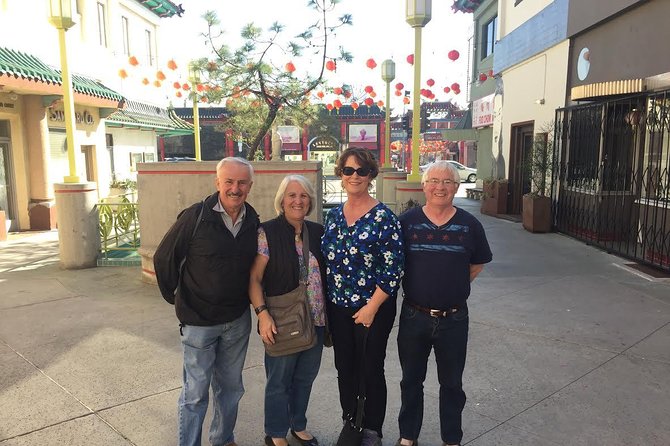
The quality of this tour hinges on the guide. One highlight from the strongest experiences is how clearly the guide explains history at each stop, and how patient they are when people need extra time.
For example, guides named Chris and Robert are specifically praised for being informative and patient, with time spent explaining the context at each location. That kind of guiding is what turns a walk into a real understanding of neighborhoods. You are not just collecting facts, you are learning how to read what you see.
If you care about cultural nuance, ask your guide questions when you feel them bubble up. This tour is built around discussion at stops like Chinatown Plaza, Japanese Village Plaza, and the Japanese American Cultural and Community Center.
Should you book it? My call based on what you’ll actually get
Book this tour if you want a focused, guided introduction to Chinatown and Little Tokyo in about two hours. The route hits recognizable anchors, includes a quick Metro transfer, and ends at a place that feels meaningful rather than random. It is also a solid option if you would rather spend your morning learning than building a self-guided itinerary from scratch.
Skip it or consider a different option if you cannot handle walking or you strongly dislike transit hops, since Metro fare is required and not included. Also keep in mind it depends on good weather, so check the day-of conditions.
If you are trying to understand how immigration history and present-day community life show up in Los Angeles, this one is a practical way to do it.
FAQ
How long is the Los Angeles Chinatown and Little Tokyo walking tour?
It lasts about 2 hours (approx.).
How much does the tour cost?
The price is $38.00 per person.
Where does the tour start and end?
It starts at 943 N Broadway, Los Angeles, CA 90012, and ends at 244 San Pedro St, Los Angeles, CA 90012 (Japanese American Cultural and Community Center).
What time does the tour begin?
The start time is 10:30 am.
Is Metro rail fare included?
No. A short Metro rail journey is required between Chinatown and Little Tokyo, and rail fare is not included.
Can the guide help with the Metro fare?
Yes. The guide can assist with acquiring rail fare during the tour.
Does the tour include a mobile ticket?
Yes, it includes a mobile ticket.
What stops are included during the tour?
It includes stops in Chinatown, Blossom Plaza, the Metro rail segment between Chinatown and Little Tokyo, Japanese Village Plaza, and the Japanese American Cultural and Community Center.
What is the cancellation policy?
Free cancellation is available. You can cancel up to 24 hours in advance for a full refund, based on the local start time, and the experience requires good weather.
More Tours in Los Angeles
More Tour Reviews in Los Angeles
Not for you? Here's more nearby things to do in Los Angeles we have reviewed





Los Angeles City Tours, compared.
 ★ 4.6Warner Bros. Studio Tour HollywoodFrom $767,191 reviews
 ★ 5.0Full-Day Iconic Sights of LA, Hollywood, Beverly Hills, Beaches and MoreFrom $996,147 reviews
 ★ 5.0Full-Day LA Tour: Santa Monica, Hollywood and Beverly HillsFrom $952,431 reviews
 ★ 3.7Hop-On Hop-Off Bus Tour with Audio GuideFrom $512,030 reviews
 ★ 5.0Half Day Best of Los Angeles Guided City TourFrom $691,966 reviews
 ★ 4.7Half-Day Best of LA TourFrom $591,778 reviews
 ★ 5.0Shared 3 Hour Los Angeles TourFrom $501,686 reviews
 ★ 4.1Hollywood & Celebrity Homes Open-Air Bus TourFrom $291,624 reviews
Browse the lists this tour appears in