
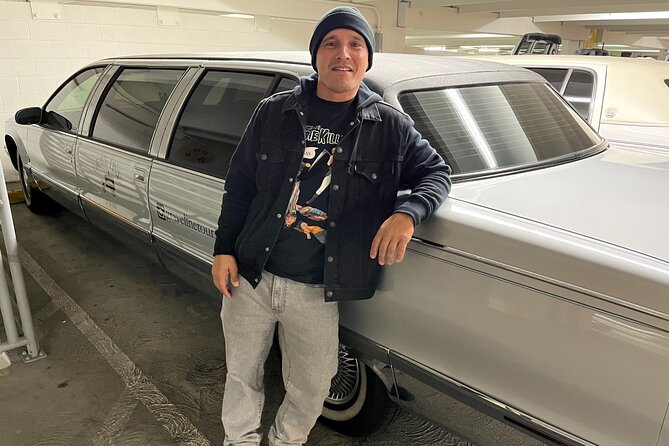
Reviewed · HOLLYWOOD TOURS
Hollywood Horror Story: The Black Dahlia Funeral Limo Tour
A limo ride through Los Angeles dark history. This tour keeps the focus on historical context and research, not cheap shock value, while you roll past key sites tied to the Black Dahlia story in a Cadillac Fleetwood. I like the way the narrative is built in a clear sequence, and I love that it tries to correct common misunderstandings. One catch: the subject matter is heavy, and the tour is not for people who get easily upset by disturbing true crime material.
You meet at Ovation Hollywood at 2:30 pm, and the whole experience runs about 3 hours. This is a small group setup, so you get time to hear the details without feeling like you are just part of a crowd. You’ll also have a mobile ticket, and the start point is near public transportation.
Key things to know before you go

- Small group of up to 8: less noise, more chance to follow the story.
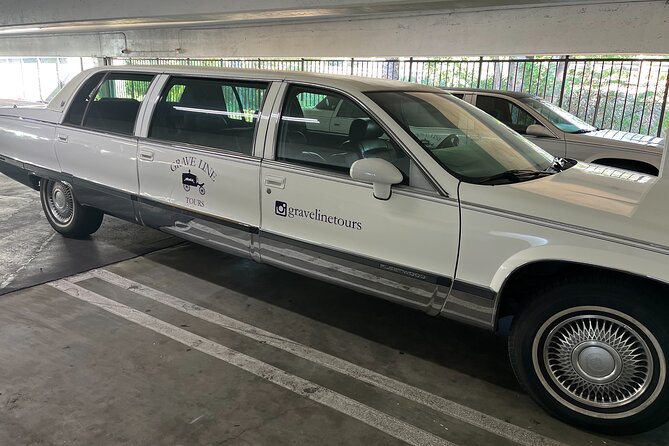
- Cadillac Fleetwood funeral limo: comfort matters when you are listening to a lot of complex information.
- A research-driven, context-first narrative: the goal is understanding, not sensationalism.
- A stop-by-stop route tied to specific locations: each stop is framed as a piece of the puzzle.
- It can be emotionally rough: if you are sensitive to true crime content, skip this one.
Hollywood Horror Story by Grave Line Tours: the limo part you’ll actually feel
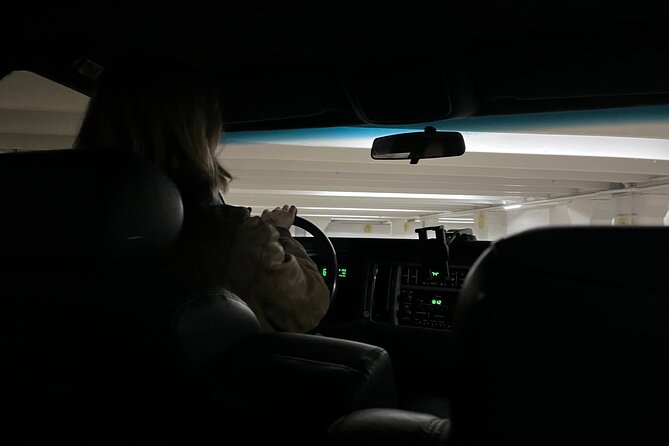
This is not a walking tour. You sit back in a Cadillac Fleetwood funeral limo, and that changes the whole pace. When you have a few hours to cover multiple locations, road time becomes listening time, and the story has room to move in order.
The biggest practical win is comfort. The ride is smooth, and the vehicle feels built for sitting still and paying attention. That matters because the material is dense. You are not just hearing names and dates, you are being pushed to understand how the case is discussed and how certain popular assumptions can get messy.
If you are coming because you want atmosphere, you’ll get it. If you are coming for a history lesson, you’ll also get that angle. The tone stays grounded, even when the subject matter is grim.
You can also read our reviews of more tours and experiences in Los Angeles.



Price and logistics for a 2:30 pm departure at Ovation Hollywood
The price is $93.08 per person for about 3 hours. For Los Angeles, that is a fair trade when you factor in the private-style vehicle experience and the small group limit of 8. You are paying for guided interpretation plus transport between several specific locations, not just “a ride and some vague facts.”
Here’s how to plan around the schedule:
- Start time: 2:30 pm
- Meeting point: Ovation Hollywood, 6801 Hollywood Blvd, Hollywood, CA 90028
- End: back at the same meeting point
- Language: English
- Ticket format: mobile ticket
Because the start is near public transportation, you can build an easy day around it. And because it returns to the start location, you avoid the hassle of figuring out your exit late in the evening.
The route: what each Black Dahlia stop is trying to show you
This tour is built around a sequence of locations connected to the Black Dahlia story. The framing matters. Each stop is treated like a clue in a wider cultural and historical context, not just a spooky photo stop.
Also, one realistic note: you are outside. You’ll see what is visible from the street or sidewalks, and you cannot expect access to private properties. Still, the way the tour points your attention can make ordinary streets feel like evidence boards.
Stop 1: the last known residence, with a window moment to watch for
The first stop centers on the last known residence of the nomadic victim, with a prompt to see if you get a glimpse of someone in her window. It’s a clever way to get you to switch from “tourist mode” to “scene visualization mode.”
What you’ll get out of this stop is perspective. The tour nudges you to think about how daily life and movement intersect with a case like this. Even if you know the headline story already, this angle helps you grasp how the case was experienced in real space, not just in retellings.
Possible drawback: if you hate being asked to imagine or look closely for details that you cannot fully confirm, this part may feel a bit unsettling. It is designed to set the tone and pull you into the sequence.
Stop 2: an Aztec-style house of secrets linked to a leading suspect
Next you pass an Aztec-style house of secrets where one of the leading suspects lived, and possibly took the lives of others. The language is intentionally ominous, but the point is not gore. The point is context: how a home becomes part of an investigation story, and how people later try to explain the gap between normal streets and horrific acts.
This is also where the research-driven approach starts to matter. Instead of just repeating the most sensational versions, the tour aims to challenge misconceptions and place the narrative in a more careful frame.
Possible drawback: you may feel like you are getting atmosphere more than answers. That is normal for a case handled through public reporting and public memory. If you want pure documentary style with step-by-step courtroom detail, you might find the emphasis on location and interpretation more than proof.



Stop 3: the verifiably evil building and the question of the last place seen alive
Then comes what the tour describes as an insidious force behind a verifiably evil building, framed as possibly the last place the Dahlia was seen alive. This stop is about where stories get locked in, and how places become anchors for public belief.
What I like about this stop is that it highlights how uncertainty can still become “certainty” in popular retellings. The tour is built to help you spot where rumors harden into accepted lore, then show you why that happens.
Possible drawback: if you are very sensitive to emotionally heavy true crime material, this is likely one of the harder moments. The tour is not shy about the seriousness of what happened, even while it aims to keep the tone thoughtful.
Stop 4: Lovers Lane, the vacant lot, and the house now standing there
The next stop is tied to where her exceptionally mutilated corpse was found in a then-vacant Lovers Lane lot, awaiting the building of the very house now standing there. This is the most direct and graphic-sounding segment of the stop descriptions, so you should mentally prepare for that.
The value here is how the tour uses time. You are being asked to picture the same stretch of land in two different eras: vacant and later built over. That kind of contrast is a real lesson in how cities change, while certain events keep their grip on local memory.
Possible drawback: this is also the stop most likely to make people uncomfortable, even if you are prepared for true crime. If you know your limits, trust them before you get in the vehicle.
And many more macabre sites between stops
After these core moments, the tour continues with additional macabre sites related to The Black Dahlia. You should expect the route to keep building a chain of associations, using each location as a way to explain how the story grew in public consciousness.
If you love true crime for the “how did we get here” part, this added material helps. If you only want a few famous points, the extra stops can feel like a lot to process in about 3 hours. That brings me to the pacing.
Research-driven narration: why sequence matters in 3 hours
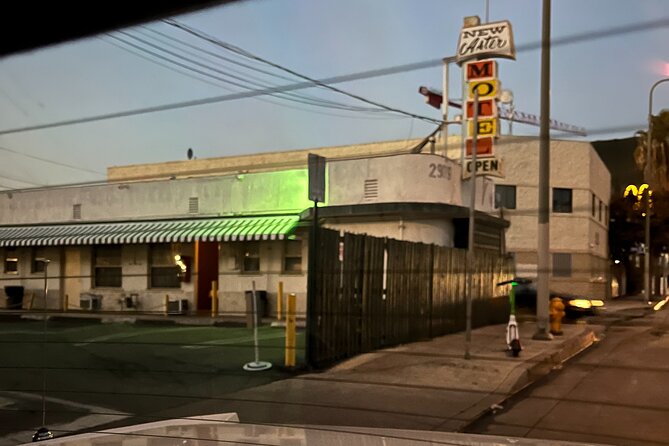
One thing that stands out about this experience is the way the story is structured like a sequence you can follow. I like that it is not just a list of locations. It’s a guided narrative built to help you understand the case’s cultural history and why certain assumptions keep showing up.
The tour is also explicitly designed to focus on historical context rather than sensationalism. That doesn’t mean it is sanitized. It means the guide spends time framing the “why” behind popular versions of the story, and it pushes you to separate what is known from what is repeated.
That approach is valuable for two types of people:
- True crime fans who want more than the headline version.
- History buffs who like to understand how media and myth shape what people think they know.
The downside of this approach is also simple: the information can feel complex. If you go in expecting a quick, easy ride, you might miss half of it while you are processing the mood. The tour works best if you treat it like a focused evening class, only with a creepy LA soundtrack of passing streets.
Small group size and what it does to your attention

With a maximum of 8 travelers, this tour has the feel of a controlled conversation rather than a constant whisper of chatter. It helps you catch details, and it reduces the chance that the guide has to rush.
This also means you should show up mentally ready. You are not doing a casual “grab photos and go” activity. You are settling in to listen, and that listening is part of the value.
If you like structured storytelling, you’ll likely appreciate the way each stop flows into the next. If you prefer highly interactive tours, you may find it more guided and less discussion-led. Either way, you will get a clear, continuous narrative arc.
Who should book the Black Dahlia funeral limo tour
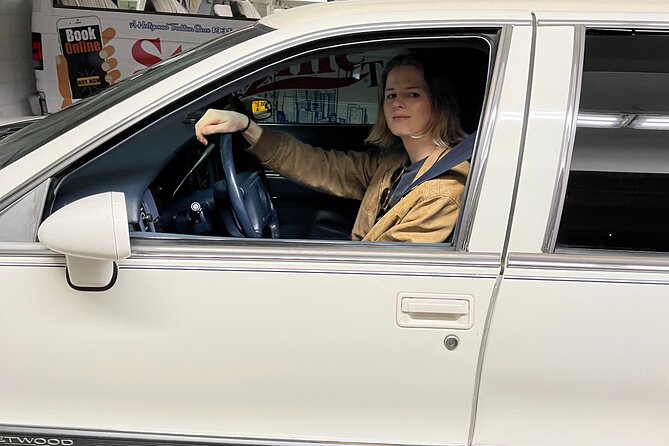
I’d book it if you fit one or more of these:
- You are a true crime fan who wants context, not just shock.
- You care about how cases are remembered in Los Angeles.
- You enjoy macabre themes, but you want a thoughtful, research-driven tone.
I’d skip it if:
- You are easily upset by disturbing content or emotionally sensitive to true crime materials.
- You want a light, casual outing. This is built to be heavy.
It is also a good fit if you want an LA experience that feels different from the usual highlights. You’ll still be in Hollywood, but the story angle is darker and more specific.
Should you book Hollywood Horror Story: The Black Dahlia Funeral Limo Tour?

If you want a smooth Cadillac Fleetwood ride, a small-group setup, and a story that leans on historical context and research, then yes, this is a strong pick. The stop sequence is designed so you can actually follow the narrative, and the overall tone tries hard to avoid turning tragedy into entertainment.
If the subject matter hits too hard for you, or if you dislike disturbing true crime themes, don’t force it. In that case, you will probably leave more stressed than satisfied.
FAQ
How long is the Hollywood Horror Story: The Black Dahlia Funeral Limo Tour?
It lasts about 3 hours.
What is the price per person?
The price is $93.08 per person.
Where is the meeting point, and when does the tour start?
You meet at Ovation Hollywood, 6801 Hollywood Blvd, Hollywood, CA 90028. The start time is 2:30 pm, and the tour ends back at the same meeting point.
How many people are in the group?
This tour/activity has a maximum of 8 travelers.
Is the tour offered in English?
Yes, it is offered in English.
Do I get a mobile ticket?
Yes, the tour includes a mobile ticket.
Is this tour recommended if I’m easily upset by true crime content?
No. It is not recommended for travelers who are easily upset or emotionally sensitive to true crime materials.
What is the cancellation and refund policy?
You can cancel for a full refund up to 24 hours in advance of the experience start time. If you cancel less than 24 hours before, the amount you paid will not be refunded.
More Tours in Los Angeles

More Tour Reviews in Los Angeles
Not for you? Here's more nearby things to do in Los Angeles we have reviewed










Hollywood Tours, compared.
 ★ 4.6Warner Bros. Studio Tour HollywoodFrom $767,191 reviews
 ★ 5.0Full-Day Iconic Sights of LA, Hollywood, Beverly Hills, Beaches and MoreFrom $996,147 reviews
 ★ 4.5Warner Bros. Studio Tour HollywoodFrom $765,246 reviews
 ★ 5.0Hollywood, Beverly Hills & Celebrity Homes Tour by Open Air BusFrom $392,557 reviews
 ★ 5.0Hollywood Sign 2.5-Hour Tour with Comedians and Their DogsFrom $152,496 reviews
 ★ 5.0Full-Day LA Tour: Santa Monica, Hollywood and Beverly HillsFrom $952,431 reviews
 ★ 4.5Hollywood and Celebrity Homes Bus TourFrom $392,074 reviews
 ★ 4.5Hollywood Open Bus ToursFrom $301,801 reviews
Browse the lists this tour appears in